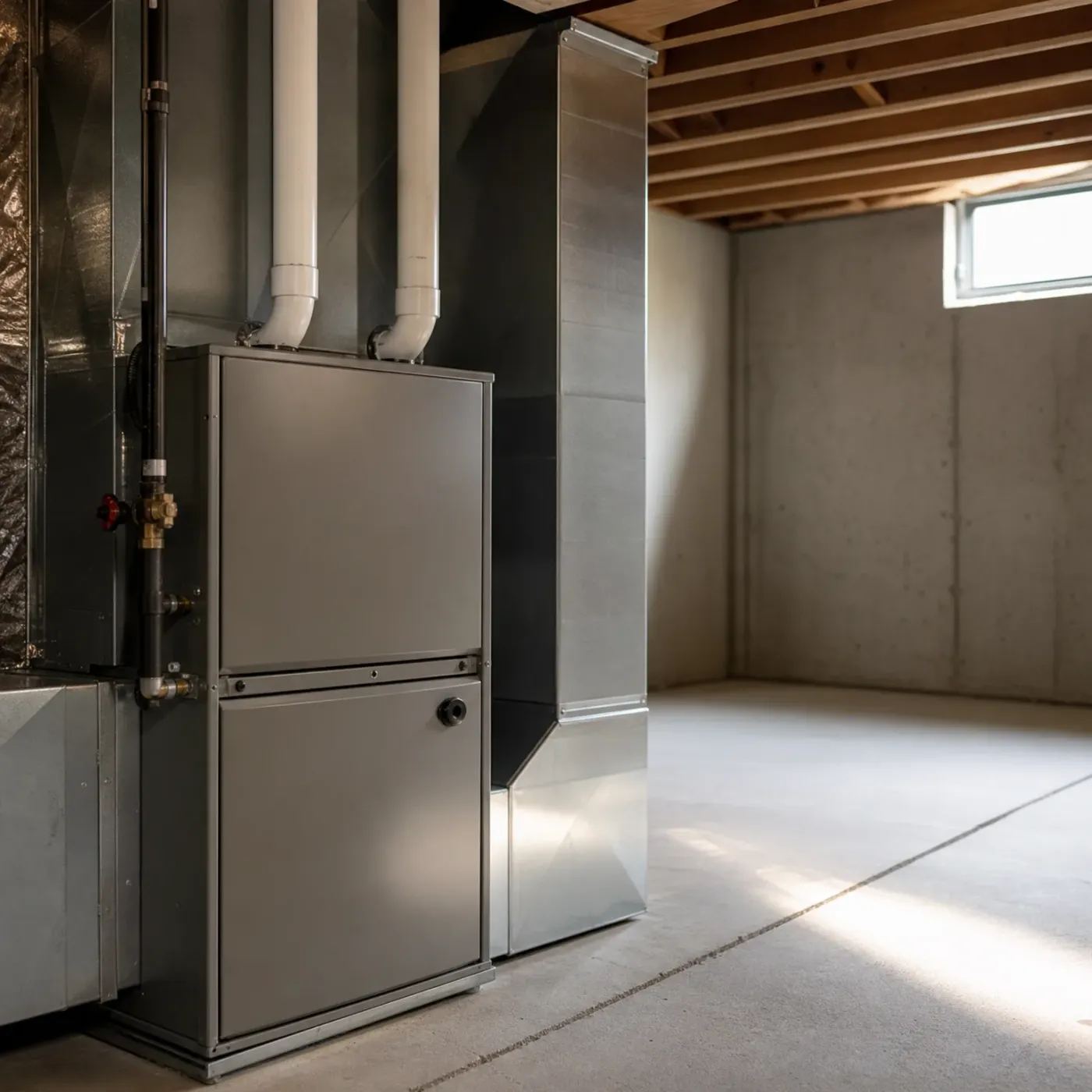
Furnace running as it should
This is what a furnace looks like doing its job with no rust, no strain, ductwork and gas lines all sound. A furnace in this shape has no trouble keeping the house warm without pulling moisture out of the air.

Dry skin, static shocks, and a scratchy throat in January can make you wonder if your house needs more moisture in the air. But Mississippi winters aren't like a dry northern winter, and most homes here heat with electricity rather than a gas furnace, so the usual advice about whole-home humidifiers doesn't always fit what's actually happening in your house.
A furnace humidifier adds moisture to air as it moves through the ductwork, and it's built to work with a gas or oil furnace. If your home heats with an electric system, which is typical here, there's no furnace to attach one to in the first place. Winters in Mississippi are also short and mild compared to colder states, so indoor air doesn't dry out the way it does where heat runs hard for months at a time. The dryness you notice some mornings is usually mild enough that a portable humidifier in a bedroom or living room handles it without adding equipment to your whole heating system.

Mississippi doesn't get the bitter cold that drains moisture out of the air the way northern winters do. Heat strips and heat pumps warm the house without baking the humidity out of it the way an old gas furnace running flat out for hours can. So the air inside stays closer to what's outside, and outside here in January is still often damp. That's a different starting point than a house in Minnesota, and it's why the same dry-skin complaint doesn't call for the same fix.

A furnace humidifier ties into the ductwork and adds moisture to the air as it moves through the system, instead of treating one room like a portable unit does. It needs a water line and a drain, and it runs off the furnace's blower, so it only adds moisture when the system is already circulating air. In a house where the air is already holding a fair amount of moisture through the winter, that added step has less work to do than it would somewhere drier.

This is what a furnace looks like doing its job with no rust, no strain, ductwork and gas lines all sound. A furnace in this shape has no trouble keeping the house warm without pulling moisture out of the air.

Rust on the cabinet and a worn look like this are worth a second opinion, whether or not you add a humidifier. A local contractor who services this equipment every winter can tell you what's wear and what's a problem.




One installer gets your project, so there's no bidding war over it.
Describe the project once instead of to every installer.
Asking costs nothing, and the choice to hire stays yours.

If your house were actually short on moisture, you'd see it. Skin that stays dry no matter how much lotion you use, a shock every time you touch a doorknob, wood floors gapping at the seams. Most Mississippi houses never get there, because the air coming in from outside already carries enough moisture that electric heat or a heat pump doesn't need to fight it. If you're not seeing those signs, adding a humidifier doesn't fix a problem, it just adds a system to maintain.
If you do want one, the search for who installs it is the same as for anything else on your furnace: find someone licensed, explain the house, get a quote, maybe call around to a second or third contractor to see if the price holds up. A local contractor who works on furnaces around Mississippi all year already knows how different this setup is from a dry-climate install, and you deal with one company instead of sorting through several bids for a job most houses here don't actually need.


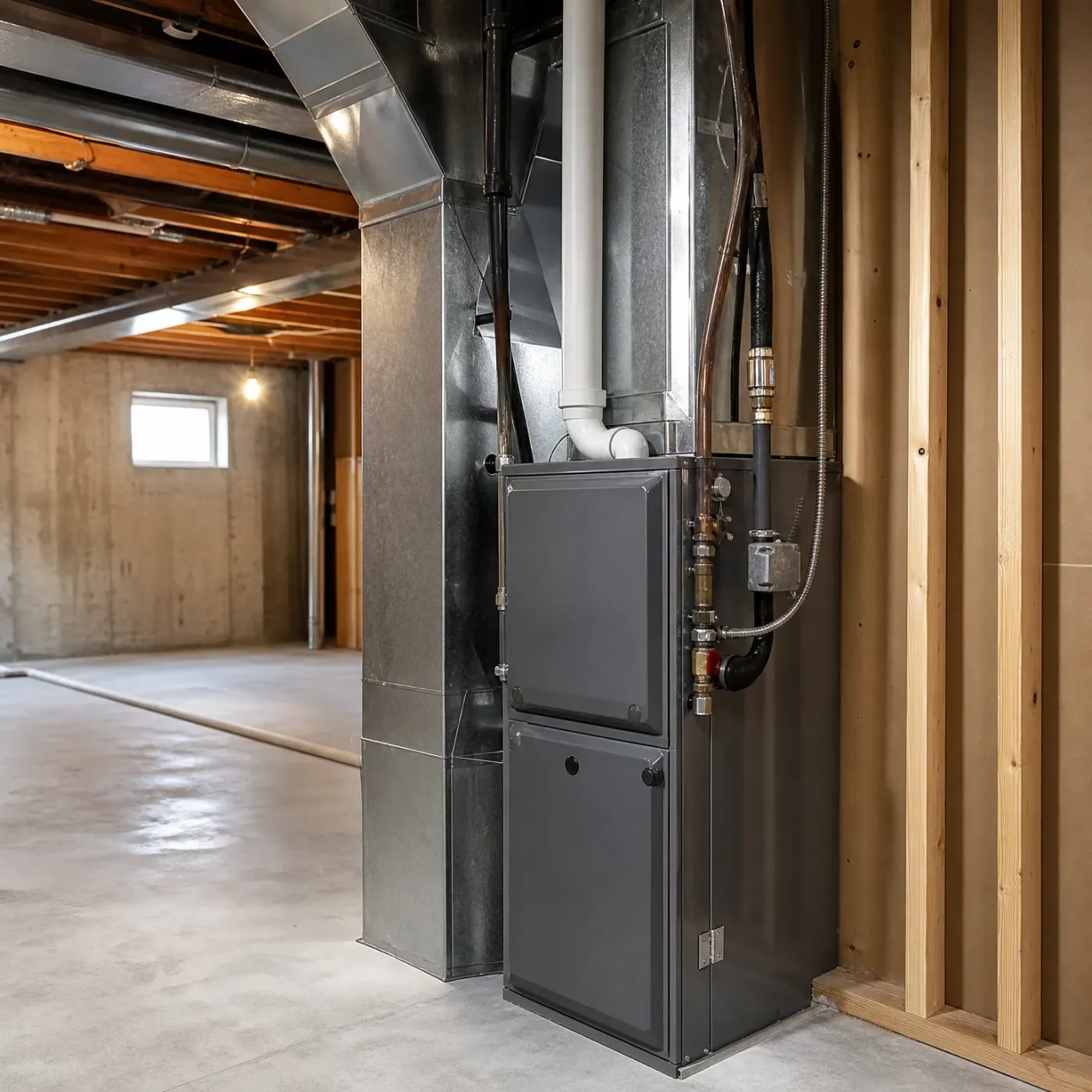
This is a furnace with no rust on the cabinet, tight joints at the ductwork, and gas lines running clean along the wall. A furnace in this condition heats the house evenly without pulling extra moisture out of the air as it runs.

Rust on the cabinet and aging flue piping don't change what the furnace does to humidity. A worn unit can still heat the house fine. If you're short on moisture, it's the dry air itself, not the furnace's condition, that's behind it.
Walk through your house in January and pay attention to what you'd actually notice. Skin that cracks no matter what lotion you use. A shock every time you touch a doorknob or the car door. Wood furniture or floors gapping at the seams. A throat that stays scratchy for weeks, not just a night or two after a cold. If none of that sounds like your house, the air already has enough moisture in it, and that's normal for a Mississippi winter. Adding a humidifier to a house that doesn't need one can push moisture higher than it should go, which shows up as condensation on windows or a clammy feel instead of a comfortable one.
A tech checks your home's humidity level room by room first
A water line gets run to the humidifier unit chosen
The unit mounts to the furnace cabinet or supply duct
A humidistat gets wired so it reads return air moisture


Those mild nights are doing work for you already. Air at 38°F holds moisture instead of shedding it, so your furnace isn't pulling the house dry the way a hard freeze would further north. That's one less reason to add a humidifier.
NOAA nClimDiv 1991-2020 county normals weighted by homes


Most houses in Mississippi don't need a furnace humidifier. The air here holds enough moisture most winters that adding more would just leave windows sweating and wood swelling instead of fixing anything. If you've walked through your house and nothing points to dry air, the heat alone isn't the problem. But if a tech looks at your ductwork or your furnace and something's actually off, that's worth getting right rather than guessing at. A local contractor who works on furnaces all winter in this climate has seen what actually fails in houses like yours, electric strips, heat pumps, old gas units, and knows the difference between a house that needs a humidifier and one that just needs the furnace itself looked at. You'd be talking to one contractor who knows the equipment, not fielding calls from several guessing at your house over the phone.