Tell us about the job
Takes about a minute. No obligation.
Sizing a furnace for this house starts with what the burner is actually asked to carry. Homes in Washington County, MS run heat about five months a year, from November through March. A contractor working out the right equipment has to account for what that kind of cycling does to the heat exchanger and ignition system over years. A furnace that is undersized for this load runs longer each call for heat, and the burner accumulates wear faster than the nameplate suggests it should. The contractor who gets that calculation wrong does not save the homeowner money on the install.
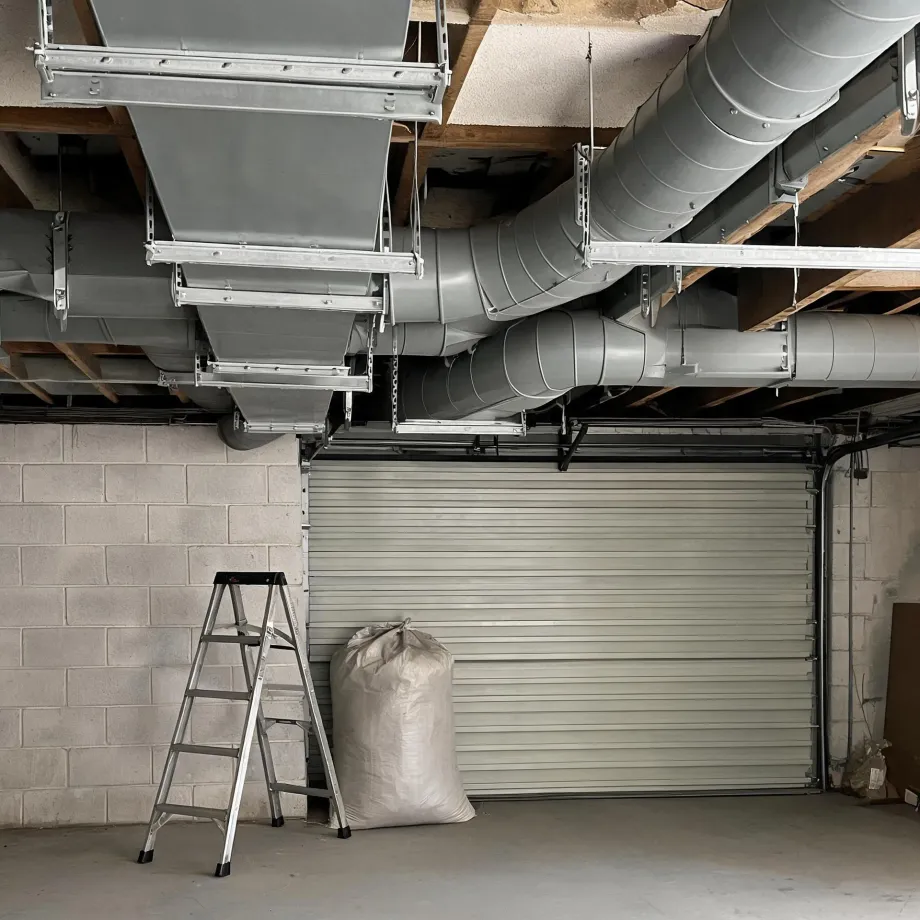
Ductwork laid out for a different system, in a different era of equipment, rarely lines up cleanly with what a contractor is putting in today. Half the homes in Washington County, Mississippi were built in 1973 or earlier (2020-2024 ACS 5-year). That gap matters for furnace installation specifically: a contractor has to assess whether the existing runs can handle the airflow a new unit requires, and whether the electrical service will carry the load. If either falls short, the scope of the job expands before the furnace itself is even priced.
What Gets Installed With a New Furnace
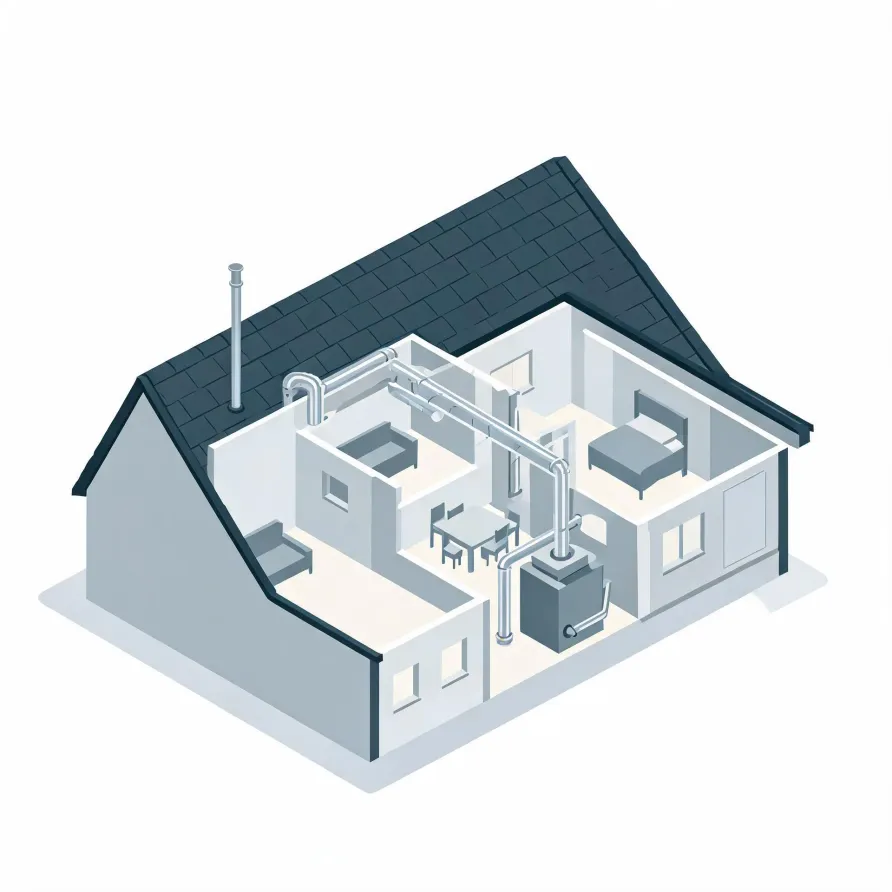
The furnace itself sits in a utility room, basement, or closet at the center of the house. It is the unit that generates heat, drawing in air, warming it, and pushing it outward. A flue pipe runs from the furnace to an exterior wall or roof to carry combustion gases out of the home.
The air handler or blower cabinet works alongside the furnace, moving conditioned air into the duct system that feeds each room. A thermostat mounts on an interior wall and serves as the control point, telling the furnace when to fire and when to stop. The refrigerant line set, if a cooling coil is paired with the furnace, runs between the indoor cabinet and the outdoor condensing unit.
The drawing shows a representative layout, and a licensed contractor determines exactly which components apply to your house and how each one is positioned.
Find a contractor in Washington CountyWashington County, Mississippi, by the numbers
115 severe weather events were recorded in Washington County, Mississippi between 2015 and 2024.
NOAA National Centers for Environmental Information, Storm Events Database, bulk CSV export, events 2015-01-01 through 2024-12-31.Half the homes in Washington County, Mississippi were built in 1973 or earlier (2020-2024 ACS 5-year).
U.S. Census Bureau, 2020-2024 American Community Survey 5-Year EstimatesWashington County, Mississippi holds 20,867 housing units (2020-2024 ACS 5-year).
U.S. Census Bureau, 2020-2024 American Community Survey 5-Year EstimatesOwners occupy 60.2% of the occupied homes in Washington County, Mississippi (2020-2024 ACS 5-year).
U.S. Census Bureau, 2020-2024 American Community Survey 5-Year EstimatesFurnace Installation Rules for Washington County, Mississippi5 sourced codes and standards
What happens when a contractor comes out to install your furnace
Non-weatherized gas furnaces manufactured on or after November 19, 2015 must reach 80.0 percent AFUE.
Non-weatherized oil-fired furnaces manufactured on or after November 19, 2015 must reach 83.0 percent AFUE.
Mobile home gas furnaces manufactured on or after November 19, 2015 must reach 80.0 percent AFUE.
Non-weatherized gas furnaces manufactured on or after December 18, 2028 must reach 95.0 percent AFUE, up from the 80.0 percent minimum that applies to units manufactured before that date.
Licensing Rules for HVAC Work in Washington County, Mississippi
Mississippi licenses residential HVAC work at every tier and at any price: a subcontractor of any tier doing heating, ventilation or air conditioning work on a residential construction or improvement project must be licensed by the State Board of Contractors no matter the dollar amount.
Severe Weather Events in Washington County
Weather patterns in Washington County put real demand on heating and cooling equipment, shortening service life and raising the stakes on installation quality. A furnace sized and fitted for local conditions holds up under that pressure in ways that a generic install does not.
115 severe weather events, 2015–2024. Source: NOAA National Centers for Environmental Information, Storm Events Database.