Tell us about the job
Takes about a minute. No obligation.
A contractor quoting a furnace install in Lafayette County has to get the load calculation right before anything else. Homes in Lafayette County, MS run heat about five months a year, from November through March. The burner, the heat exchanger, and the ignition system carry that load every year, and an undersized furnace cycles harder and more often than a correctly matched one does. Those extra cycles show up in the heat exchanger first, as fatigue that a visual inspection catches before it becomes a carbon monoxide problem. A contractor who skips the load calculation and pulls a unit off the shelf based on square footage alone leaves the homeowner with a furnace that the season will wear out ahead of schedule.
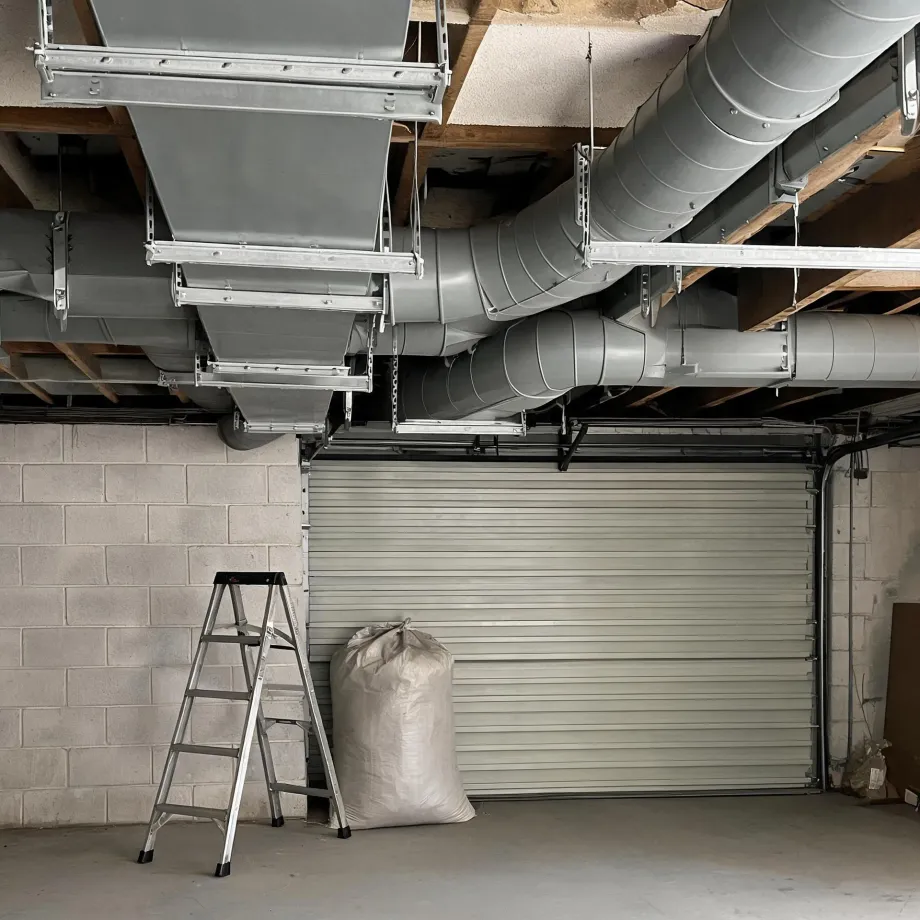
Existing ductwork is what a furnace installation turns on in much of Lafayette County, and what the ducts were originally sized for is rarely the same as what a new unit needs to push through them. Half the homes in Lafayette County, Mississippi were built in 2000 or earlier (2020-2024 ACS 5-year). Housing of that vintage was built around equipment with different airflow demands, and duct runs laid out for that equipment carry consequences a contractor has to measure before the new furnace goes in. If the ductwork cannot handle the load, the install does not simply proceed; the scope changes. The electrical service matters too, but duct capacity is where the real decision gets made first.
What Gets Installed With a New Furnace
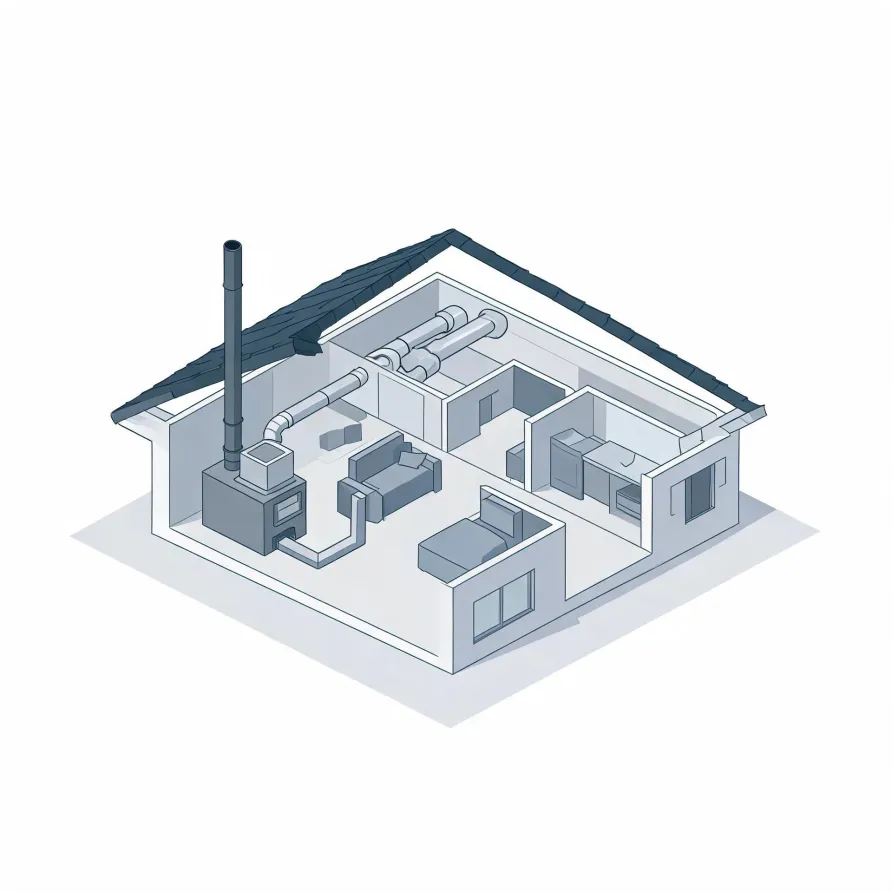
The furnace itself sits in a utility room, basement, or closet and is the unit that generates heat for the house. A burner assembly inside it ignites the fuel, and a heat exchanger transfers that warmth to the air moving through the system. The blower motor, housed inside the same cabinet, pushes conditioned air outward.
The flue or vent pipe runs from the furnace cabinet to an exterior wall or through the roof, carrying combustion gases out of the house. Sitting close to the furnace, the air handler or evaporator coil cabinet connects the heating side of the system to any cooling equipment already in place, and the thermostat mounts on an interior wall to give the homeowner control over all of it.
The drawing shows a typical layout, and a licensed contractor determines exactly what applies to this house.
Find a contractor in Lafayette CountyLafayette County, by the numbers
79 severe weather events were recorded in Lafayette County, Mississippi between 2015 and 2024.
NOAA National Centers for Environmental Information, Storm Events Database, bulk CSV export, events 2015-01-01 through 2024-12-31.Half the homes in Lafayette County, Mississippi were built in 2000 or earlier (2020-2024 ACS 5-year).
U.S. Census Bureau, 2020-2024 American Community Survey 5-Year EstimatesLafayette County, Mississippi holds 28,714 housing units (2020-2024 ACS 5-year).
U.S. Census Bureau, 2020-2024 American Community Survey 5-Year EstimatesOwners occupy 63.8% of the occupied homes in Lafayette County, Mississippi (2020-2024 ACS 5-year).
U.S. Census Bureau, 2020-2024 American Community Survey 5-Year EstimatesFurnace Installation Rules for Lafayette County, Mississippi5 sourced standards and codes
What Happens When a Contractor Installs Your Furnace
Non-weatherized gas furnaces manufactured on or after November 19, 2015 must reach 80.0 percent AFUE.
Non-weatherized oil-fired furnaces manufactured on or after November 19, 2015 must reach 83.0 percent AFUE.
Mobile home gas furnaces manufactured on or after November 19, 2015 must reach 80.0 percent AFUE.
Non-weatherized gas furnaces manufactured on or after December 18, 2028 must reach 95.0 percent AFUE, up from the 80.0 percent minimum that applies to units manufactured before that date.
Licensing and Legal Requirements in Lafayette County, Mississippi
Mississippi licenses residential HVAC work at every tier and at any price: a subcontractor of any tier doing heating, ventilation or air conditioning work on a residential construction or improvement project must be licensed by the State Board of Contractors no matter the dollar amount.
Severe Weather Events in Lafayette County
Weather extremes put real load on heating equipment, shortening cycles, stressing components, and shifting what a furnace needs to handle over its working life. What gets installed in Lafayette County has to be sized and specified for what the climate here actually does.
79 severe weather events, 2015–2024. Source: NOAA National Centers for Environmental Information, Storm Events Database.