









Furnace making a loud noise in Gulfport, MS

After this form, you can stop searching for a furnace pro.

I'm done searching

A loud bang when your furnace starts usually means gas is building up in the burner chamber before it lights, then catching all at once. A screech points to the blower motor or its bearings. Rattling often means a loose panel or a part worn enough to shake against the housing. Furnaces in Gulfport don't run long or hard most winters, since the season is mild and short, so parts tend to wear from age and sitting idle rather than from steady heavy use. A bang on startup is worth having looked at soon, since repeated small gas delays stress the heat exchanger over time. Screeching and rattling are less urgent but won't fix themselves. If the noise is new and your system came with the house, have someone check it before the next cold stretch rather than after something fails.

A woman in a gray sweatshirt with her hair pinned up sits in a living room looking off to the side, with a pale sectional sofa, cushions, a potted plant, framed wall art and a large window behind her.
A woman with long wavy brown hair in a gray top and dark cardigan stands near a window, looking to the side, with a living room, fireplace and round mirror blurred behind her.
A woman with curly dark hair in a grey long-sleeved top sits on a grey couch with patterned cushions, looking off to the side in a softly lit living room.
A woman in a gray knit sweater with her hair in a bun sits on a couch indoors, smiling and looking off to the side, with a dining area and framed picture blurred in the background.

Why is my furnace suddenly this loud

You probably heard it from another room, a bang when the heat kicks on or a screech that keeps going while it runs. Metal rattling against metal usually means a panel has worked loose or a part inside has worn down enough to shake against its housing. A burning or electrical smell with any of this is different from the rest and means the furnace should go off until someone looks at it. Left alone, a bang that keeps happening can stress the burner chamber and the heat exchanger behind it, and a worn blower motor tends to fail outright rather than quiet down. With mild winters here, the furnace may only run for part of the day, so a noise that only shows up on the coldest nights is still worth paying attention to now.

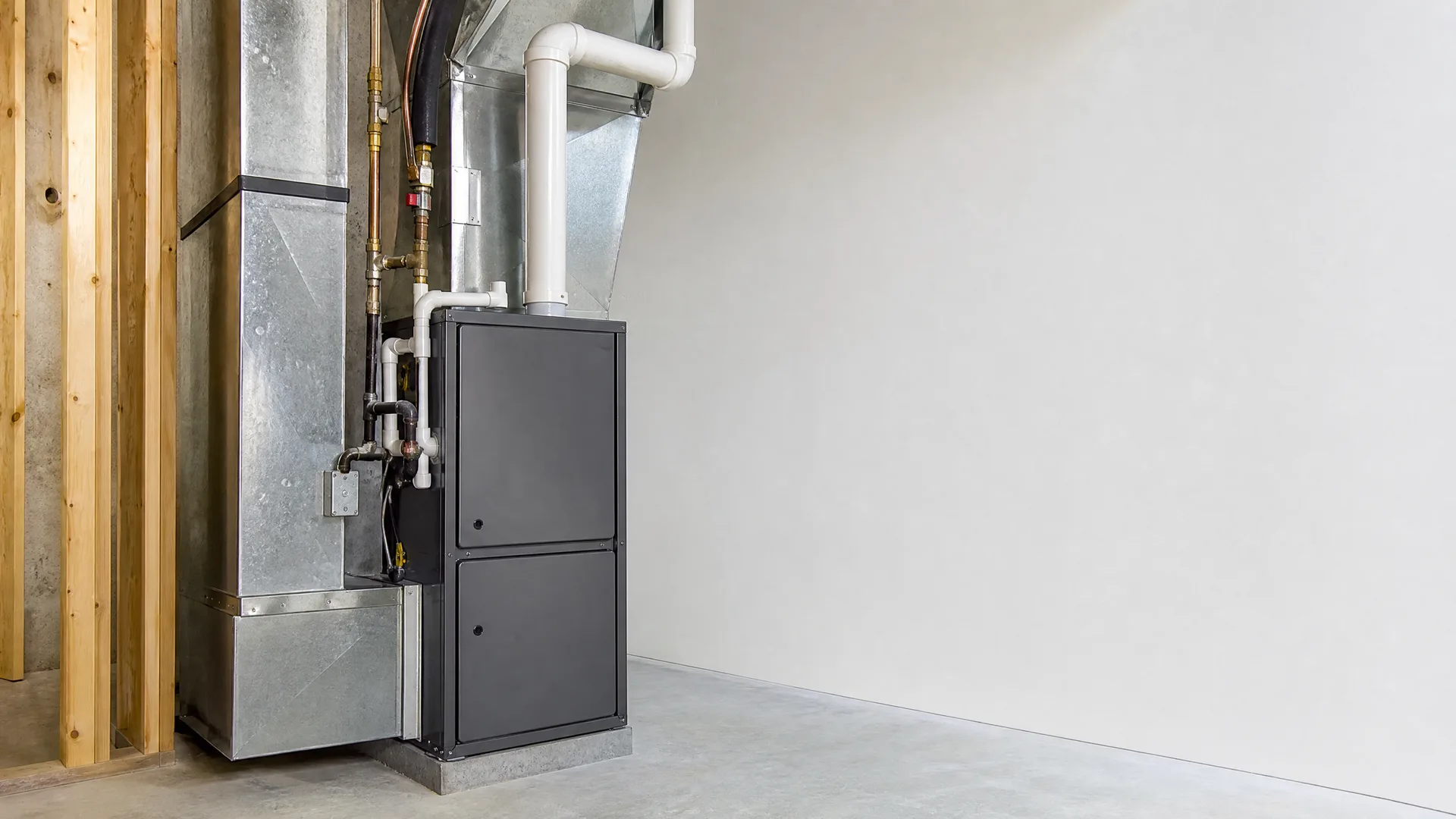
A dark gray furnace connected to galvanized sheet-metal ductwork, white PVC vent pipes and copper piping, standing against a plain light wall in a room with a bare concrete floor and exposed wood framing at left.

Why the bang happens at all

A furnace lights with a small flame at the igniter, inside the burner chamber. If gas reaches that chamber before the flame is ready, it pools for a second or two, then lights all at once instead of burning steady as it enters. That delayed catch is what you hear as a bang. A dirty igniter or a burner port clogged with dust is usually the reason the flame is slow to start.

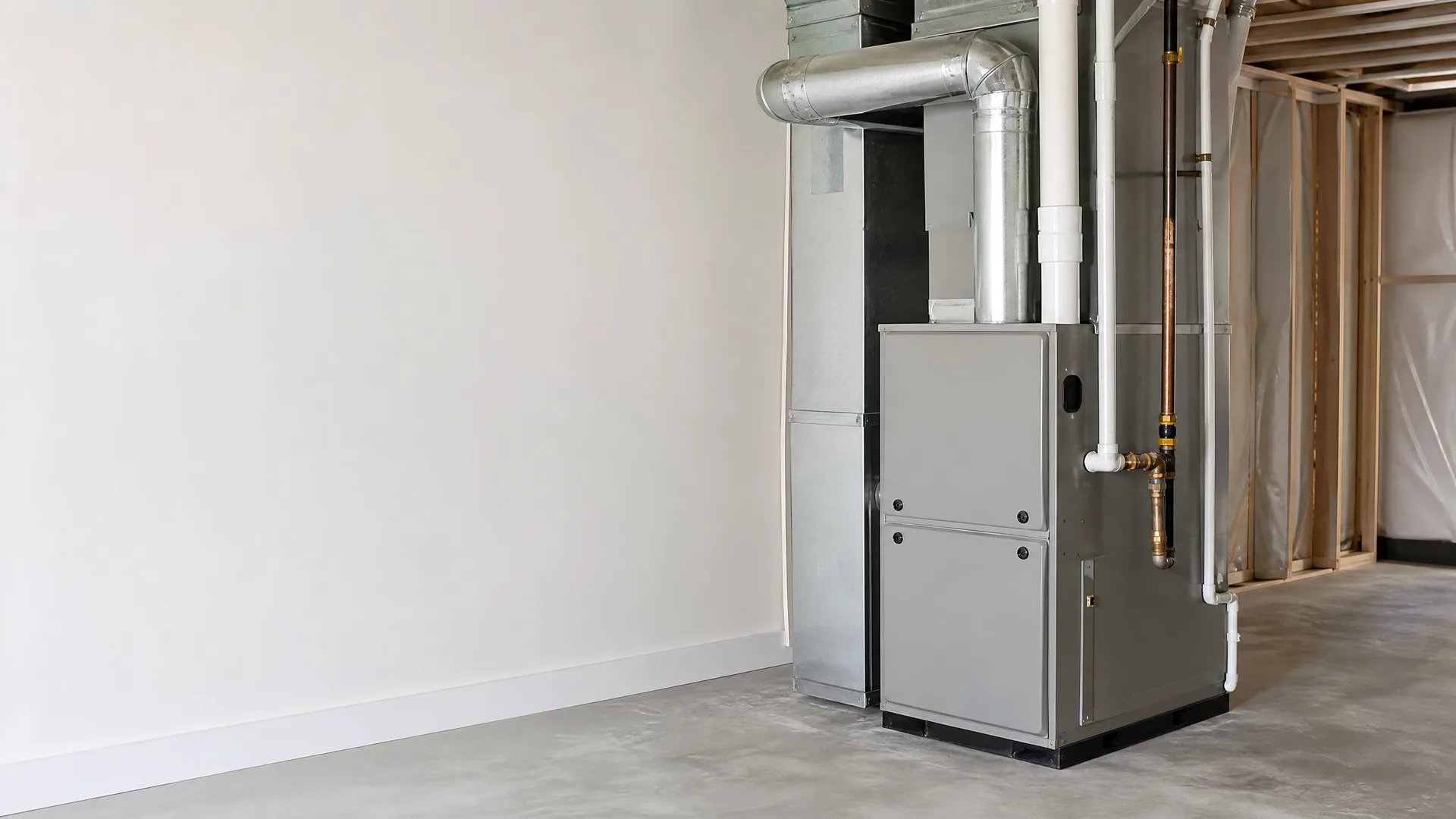
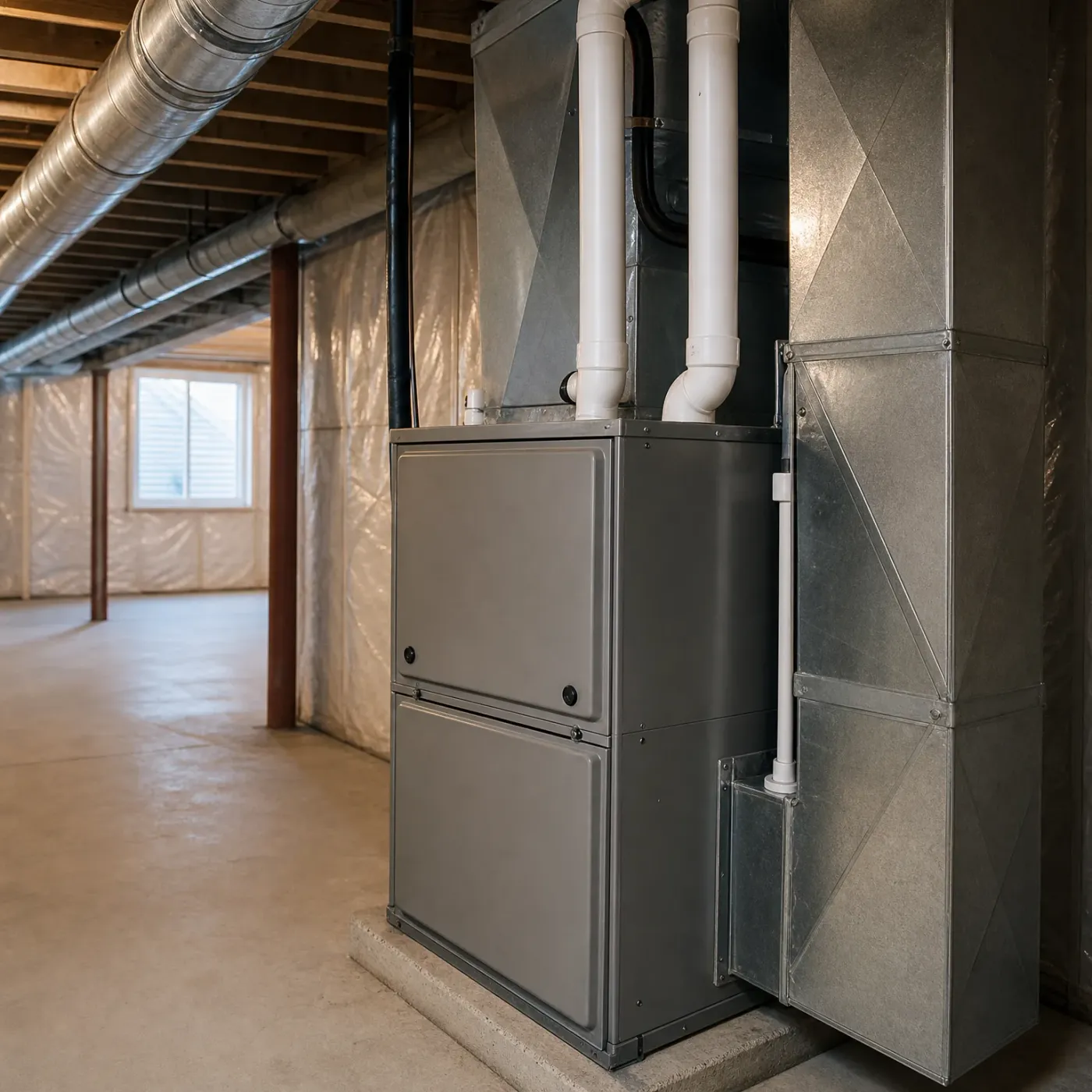
A gray high-efficiency furnace with sheet-metal ductwork, white PVC vent pipes and copper piping stands against a wall in an unfinished basement with a concrete floor and insulated wood stud framing at right.

Where the squeal actually comes from

Most furnaces here run on electricity, and the blower that pushes air through your ducts turns on a motor with its own bearings. Those bearings wear with use, and a worn one drags instead of turning smooth, which is the screech you hear while the furnace runs. The noise usually starts quiet and gets worse over weeks, since the bearing keeps wearing every time the blower cycles on.

Why does my furnace screech when the blower kicks on?

A screech when the blower kicks on is different from the bang most people call about first. It usually keeps going the whole time the blower runs, not just for a second. You want to know if that's a part about to fail or something smaller, and whether it's safe to keep running the furnace while you wait for someone to look at it.

The screech is the blower motor's bearings wearing out

The blower motor spins every time your furnace calls for heat, and it runs for as long as the system is pushing warm air through the ducts. Inside that motor are bearings that let the shaft turn smoothly. As they wear down, metal starts grinding against metal instead of turning freely, and that friction is what you're hearing as a screech. It usually starts faint and gets louder over days or weeks as the bearings wear further. A motor can keep running for a while in this state, but worn bearings put more strain on the motor itself, and a motor that locks up stops delivering heat until it's replaced.

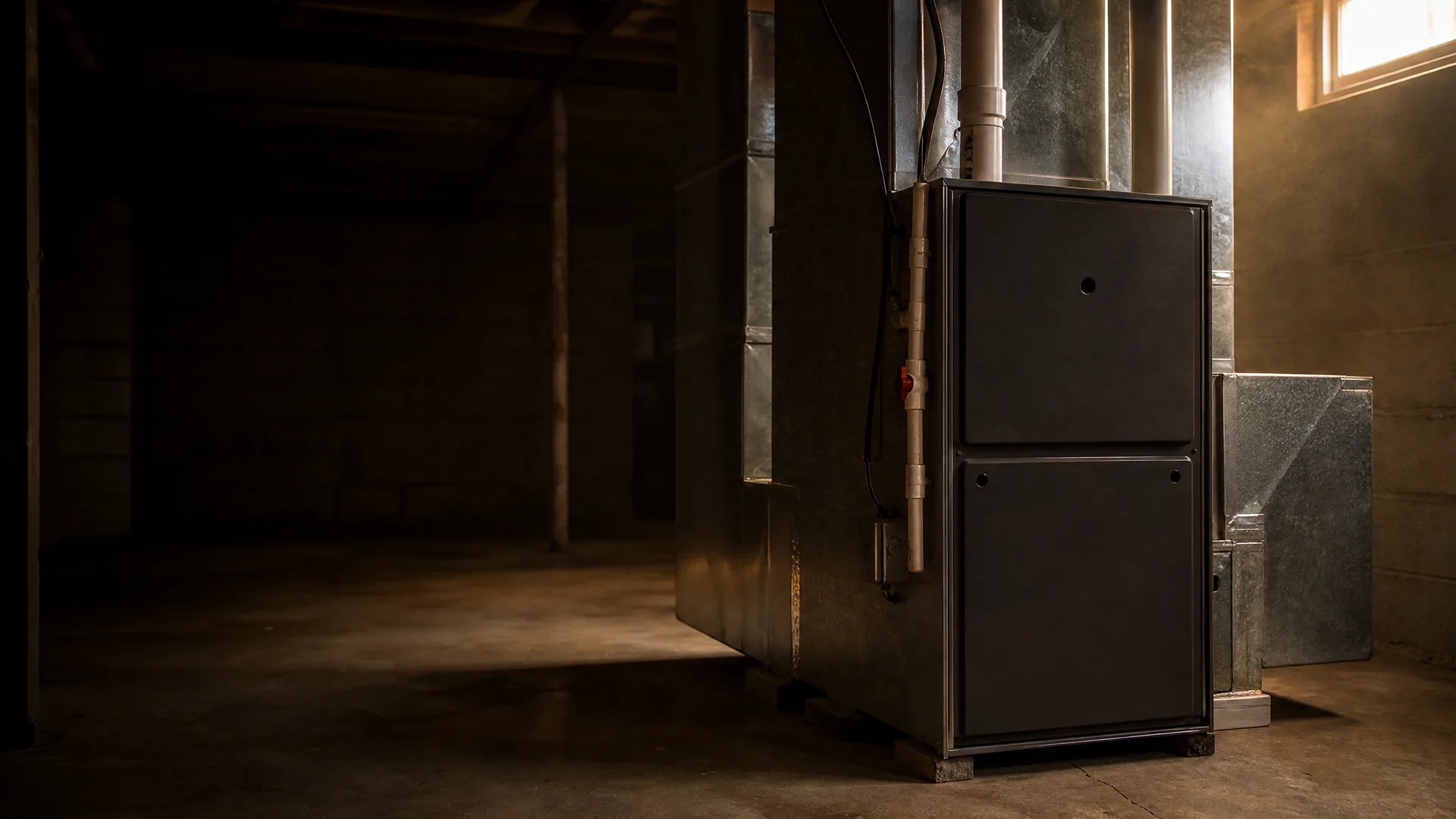
A dark residential basement with a concrete floor and block walls, containing a furnace with two access panels connected to galvanized sheet-metal ductwork and a white vent pipe, lit by a small window at upper right.

The basement is cold by seven on a November night, cold enough that you notice it on the stairs. The furnace sits against the far wall, dark, not even the faint hum it usually has. You flip the switch at the thermostat upstairs and wait, and nothing lights. Down here the air smells faintly of dust, the kind that settles on a furnace that hasn't run since last winter. You crouch by the access panel and listen for the click of the igniter. It doesn't come. Outside the window well, it's gone fully dark, and the house is quiet except for your own breathing and the furnace staying exactly as cold as the room around it.

Get It Checked or Wait It Out

Have it looked at now

  • A bang at startup means gas is pooling before it lights, and that gets worse the longer it goes unchecked.
  • A screech from the blower motor can mean the bearings are failing, and a seized motor stops the furnace from running at all.
  • Rattling from a loose panel is simple to fix now, before it rubs through a wire or a refrigerant line behind it.
  • A furnace that's already making noise can still fail on the next cold night, leaving the house with no heat until someone gets to it.
  • Catching it while it's just a sound means the technician is scheduling a repair, not responding to a breakdown.
  • Most noises like these come from a specific worn or loose part, and a local technician who works on these furnaces every winter knows where to look first.

Wait and see

  • If the noise is new and happens once in a while, it might be worth noting when it happens before deciding anything.
  • Some sounds, like a panel ticking as metal heats up and expands, don't point to a failing part.
  • Waiting means the furnace is still heating the house in the meantime, which matters on a cold night.
  • If the noise doesn't repeat or get louder over a few days, it may not be urgent yet.
  • Waiting on a bang or a steady screech risks turning a small repair into a bigger one, or losing heat on a night it's actually cold.
  • A part that's already worn enough to make noise won't quiet down on its own.
A gray high-efficiency furnace stands on a concrete basement floor beside galvanized sheet-metal ductwork, white PVC vent pipes, copper and black piping, and unfinished wood stud framing.
Gas lights the moment it reaches the burner, and the furnace runs with a steady, low hum you barely notice.
A gray furnace with two access panels stands on a concrete basement floor beside sheet-metal ductwork, with pipes, flexible conduit and an electrical box on the concrete wall to the left.
A bang, a screech, or a rattle means something inside isn't working the way it should, and it won't fix itself.
A woman with dark hair in a bun sits wrapped in a chunky knit blanket on a couch with a child resting his head on her shoulder, eyes closed, beside a lit lamp and bookshelf indoors.
A smiling older woman with gray hair in a cream knit sweater stands in a dimly lit kitchen beside a window showing snow outside, with a round loaf of bread on the counter in the foreground.
A gray high-efficiency furnace on a concrete pad in an unfinished basement, with white PVC vent pipes, galvanized sheet-metal ductwork, insulated walls and a small window in the background.

Let someone else find the pro

The pro who reaches out is licensed in Mississippi.

One request and the search for a pro is handled.

Hand it over

Asking costs nothing, and the choice to hire stays yours.

A beige gas furnace with a metal flue pipe stands in a basement against concrete block walls, beside sheet-metal ductwork, copper and white plastic pipes, and a water heater at right.
Before you get your furnace repair
A gray high-efficiency furnace with white PVC vent pipes stands beside sheet-metal ductwork and a water heater in an unfinished basement with concrete walls and wood framing.
After you get your furnace repair

A noise you can live with

A furnace that hums low and steady while it runs isn't bothering anyone in the house. You hear it kick on, maybe notice warm air starting to move through the vents, and that's about it. Nobody in Gulfport is lying awake over a furnace doing what it's supposed to do. If that's what you've got, there's nothing here that needs a call. The noise worth tracking is the one that wasn't there last week, or the one that's gotten louder since the last time you noticed it at all.


A noise that means something's wrong

A bang at startup, a screech that holds steady while the blower runs, a rattle that wasn't there before. These don't come from a furnace running fine. Gas pooling before it lights, a blower motor losing its bearings, a panel or part shaking loose. Left alone, the bang gets harder on the burner chamber each time it happens, and a motor that's screeching now can seize later. This is the furnace telling you something before it stops telling you anything at all.

Winter nights average 42°F

Nights here average 42°F through December, January and February, so your furnace isn't working against real cold. It cycles on for shorter stretches than it would further north. A bang or screech you hear on a mild night like that isn't the furnace straining against the weather. It's telling on itself.

NOAA nClimDiv 1991-2020

A beige high-efficiency furnace in an unfinished basement, with white PVC vent pipes, a yellow gas line, metal ductwork, and exposed wood framing on a concrete floor.

Running the way it should

This furnace sits connected and settled, ductwork fitted tight above it, the PVC pipes running clean to the wall. It draws gas through the line on the left and burns it quiet. Nothing here fights the panels or the frame around it.

An older beige furnace with two louvered vent panels stands on a concrete basement floor, connected to galvanized ductwork and a metal flue pipe, with gas piping and flexible conduit on the wall behind.

Something's working loose

This one runs its exhaust up through a flue pipe into the duct above, iron gas pipe feeding it from the side. A furnace built this way has had years to let a panel rattle loose or a part inside wear down enough to knock against the housing.

How much does my furnace actually run in Gulfport?

  • Winter nights average 42°F

    Winter nights here average 42°F, cold enough to run heat but not cold enough to push a furnace hard night after night.

  • Heat runs November through March

    Heat runs November through March here. A noise that shows up in that stretch is worth a look before the season's over.

  • 76.3% of homes heat with electricity

    76.3% of homes in Harrison County heat with electricity, so an electric furnace making noise is the common case here, not the exception.

NOAA nClimDiv 1991-2020 · ACS 2020-2024

What the noise tells you

  • A bang at startup, a screech from the blower, or a rattle from a loose panel each points to a different fix, not a guess.
  • None of these noises stop on their own, and the ones tied to gas buildup are worth having checked soon rather than later.
  • A furnace that only hums low while it runs is working the way it should, and that's the sound to listen for after the repair.
  • The contractor who takes this call works on furnaces around Gulfport all winter and knows which of these noises shows up most and why.
  • You're matched with one licensed local contractor for this job, so you're not fielding calls from several companies trying to win the work.
  • Mild nights here mean your furnace isn't straining against hard cold, so a new noise is about the equipment, not the weather asking too much of it.

A bang at startup, a screech from the blower, or a rattle from a loose panel each has its own cause, and that's what gets checked first. None of them clear up on their own. The bang in particular, gas pooling before it lights, is worth having looked at soon rather than waiting to see if it happens again. A furnace that runs with a low, steady hum is doing what it's supposed to do. That's the sound you're listening for once the repair is done, not silence, just the quiet, even hum of air moving through the vents.

Winters in Gulfport are mild, so your furnace isn't running flat out against hard cold most nights. A new noise now is almost always about something inside the unit, a loose part, a worn bearing, gas not catching clean, not the system straining to keep up with the weather. That's part of why it's worth getting looked at rather than watched.

The contractor who takes this call works on furnaces around Gulfport all winter. They've heard these same noises come from the same handful of causes often enough to know where to check first. You're matched with one licensed local contractor for the job, not a handful of companies competing for it, so the person who calls you back is the one who's actually coming out. That's a smaller, more direct path than searching on your own, and it starts as soon as you send the request.

An empty basement with bare concrete walls and floor, exposed wooden joists and pipes overhead, and a dark furnace with sheet-metal ductwork and vent pipes in the right corner.

One request and it's handed off

Only one pro gets your request, so you hear from one company.

Step 1 of 3: Equipment
