A Rankin County pro who repairs furnaces gets your request.
A pilot light that won't stay lit usually means the flame sensor or thermocouple isn't reading the flame the way it should, or there's a draft problem in the flue. It can also mean a dirty pilot orifice or a gas valve that's failing. None of these are things to keep relighting your way past. If the flame keeps going out, your furnace is telling you something specific, and it needs someone to look at the part, not just the pilot.
Most homes in Pearl and around Rankin County heat with electricity, which means furnaces here don't run constantly through a hard winter the way they might further north. Winters are mild. But a furnace that sits unused for long stretches between cold snaps can develop exactly this kind of problem, a sensor that's gone bad or a part that's collected dust since last year. When you do need heat, you need it working.
Getting this looked at means getting matched with a contractor who is licensed to work in Mississippi and local to this area, someone who services furnaces in Rankin County as a regular part of the job, not an occasional one. That matters because a pilot light problem can come from more than one part, and figuring out which one it is takes someone who's seen this exact furnace issue before, more than once, in homes like yours.
You'll be matched with one contractor, not several competing for your call. That contractor reaches out to you directly, already knowing what you've described about the problem. From there, they can look at the actual unit, the actual pilot assembly, and tell you what's failing and what it takes to fix it.
A pilot light that keeps going out almost always comes down to a weak signal from the thermocouple, the small rod that sits in the pilot flame and tells the gas valve it's safe to stay open. If that rod is dirty, bent away from the flame, or just worn out, the valve reads it as no flame and shuts the gas off, even while the pilot is lit right in front of you. A draft down the flue can blow the flame off the thermocouple the same way, which matters more in older furnaces with looser flue connections. Most furnaces around Pearl sit unused for long stretches since homes here heat with electricity, and a pilot system that sits idle most of the year tends to collect dust on the orifice and grime on the thermocouple faster than one running daily. Relighting it yourself might hold for a day or two, but if it keeps going out, something is stopping that flame from being read as real, and it needs a furnace tech to find which part it is.
Why does a pilot light problem matter more once the cold sets in?
Winter nights average 37°F
Nights average 37°F here in December and January, so a furnace that won't hold a flame leaves the house relying on nothing.
Heat runs November through March
Heat only has to run November through March here, which is often exactly when a weak thermocouple finally stops working.
47.1% of homes heat with electricity
Most homes in Rankin County heat with electricity, so a gas furnace acting up is one of the few things left to call someone about.
NOAA nClimDiv 1991-2020 · ACS 2020-2024
The pilot stays lit
The flame burns steady, blue, and tall enough to wrap around the thermocouple. The furnace fires when the thermostat calls and keeps running until the house reaches temperature. No smell of gas, no clicking as the gas valve tries and fails to hold open.
The pilot keeps going out
The flame lights, then dies within seconds of letting go of the gas control knob. Sometimes it won't catch at all. Either way the furnace can't produce heat, and on a cold night that's the whole problem, not a small one.
Does this sound like what's happening at your furnace
You go to light it and the flame catches, but a minute later it's out again. Maybe you've relit it three or four times tonight already. You might notice the flame looks small or more yellow than blue, or it leans away from the thermocouple instead of wrapping around it. Some houses pick up a faint gas smell near the furnace right before the pilot drops out. You may hear a click as the gas valve tries to hold and fails. With nights in Rankin County averaging in the upper 30s through December and January, a furnace that won't hold a flame leaves the house with no backup once the temperature drops after dark.
Furnace running right
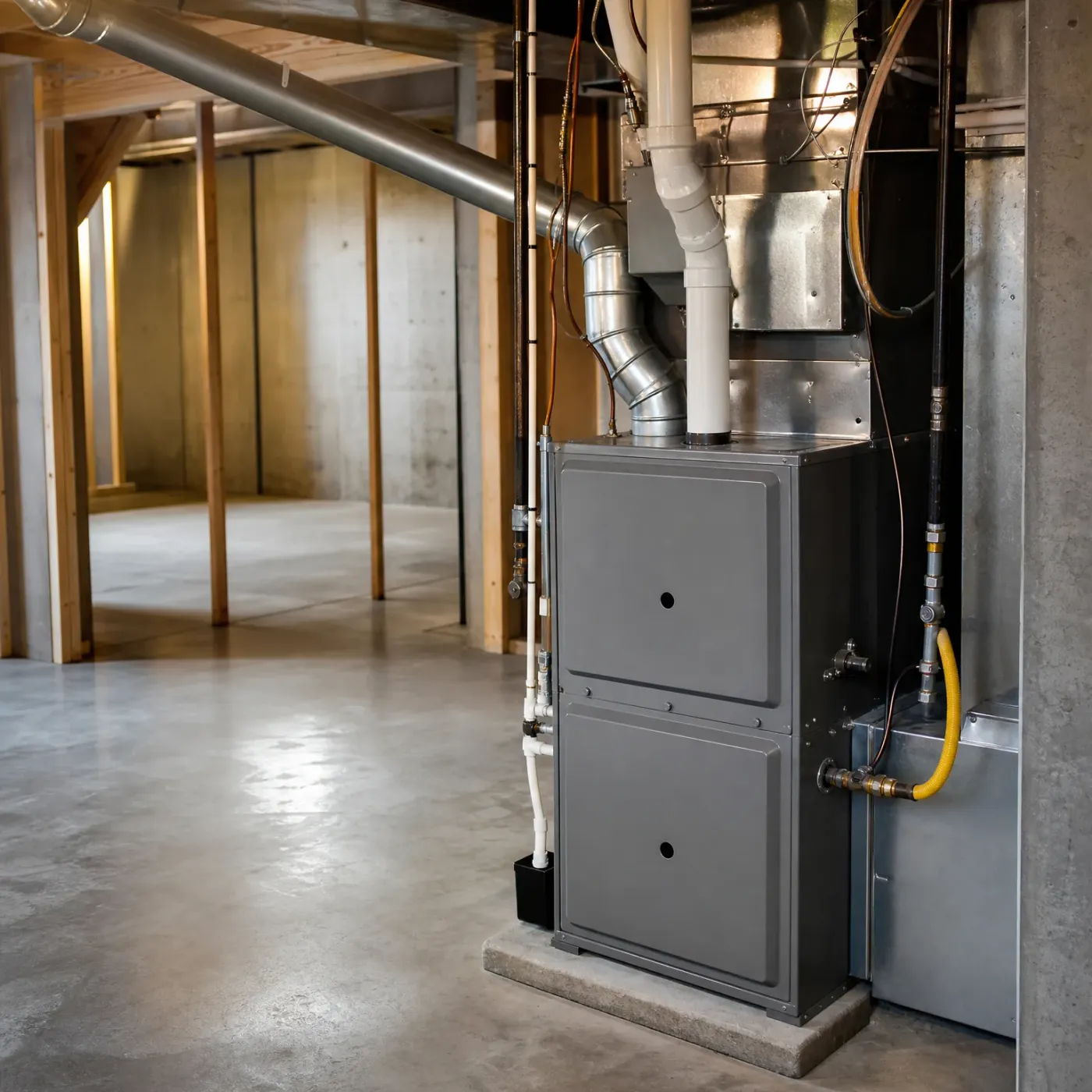
The flame is steady and the cabinet is quiet. Air moves through the plenum on its own schedule, and the flue pipes carry exhaust out without any smell reaching the basement. You set the thermostat and forget about it until spring.
Furnace losing the pilot
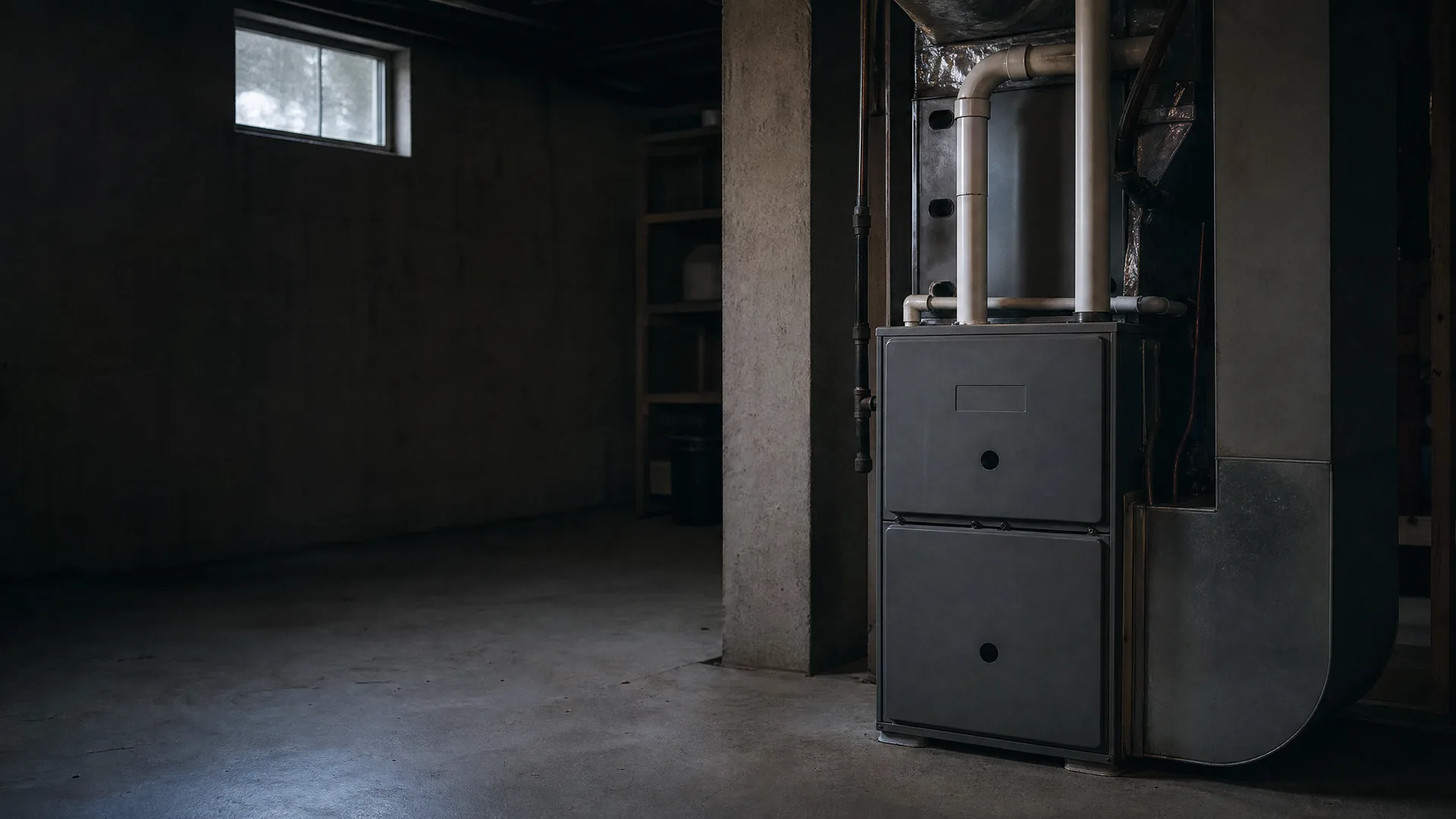
The flame catches, then dies a minute later, so you're back down at the furnace relighting it again. On an older unit like this one, that usually points to the thermocouple or a draft pulling the flame away from where it needs to sit. Left alone, the house just keeps getting colder.
Relight It Again, or Get It Looked At
Call someone now
A pilot that won't hold a flame after dark means no heat kicks in when the thermostat calls for it.
Relighting it yourself only works until the thermocouple or sensor fails the next time, which can be the same night.
A gas smell near the pilot assembly or soot around the burner means the problem is bigger than a dirty orifice.
A local contractor who works on furnaces all winter in Rankin County can tell a bent thermocouple from a failing gas valve in one visit.
Waiting through a string of 37°F nights with a furnace that won't hold flame leaves the house with no backup heat source.
Wait and watch
If the pilot stayed lit after the last relight and the flame looks blue and steady, there's nothing to act on yet.
A single flicker during a windy night can just be a draft through the flue, not a failing part.
If the furnace has run fine for weeks and this is the first time it's gone out, one relight is a reasonable test.
Mississippi winters are short, so a furnace that holds its pilot through one or two cold snaps may make it to spring without more trouble.
If the flame catches fully and the furnace runs its full cycle before shutting off normally, the thermocouple is still doing its job.
Before you get your furnace repairAfter you get your furnace repair
Find a furnace repair pro in Rankin County
A licensed pro who repairs furnaces in Rankin County gets your request.
Get matched with someone who does this kind of work in Rankin County.
A clean pilot assembly holds a tall blue flame against the thermocouple, so the gas valve stays open and the furnace runs the full cycle.
Age and grime around the access panels often go with a pilot that won't hold, the flame sensor fouled or the thermocouple worn past reading true.
The basement is cold enough that you can see your breath near the stairs. It's past seven, dark outside, and the furnace sits quiet against the wall, no hum from the blower, no blue flicker behind the little window. Dust hangs in the air where you just knelt down to check the pilot again, your knees against the concrete. You struck the igniter twice. Both times the flame caught, held for a few seconds, then died. Upstairs the thermostat is set to 68 and nothing is happening about it. You sit back on your heels and look at the dark burner, deciding whether to try a third time or call it for the night.
Why does my pilot light go out only after I've relit it a few times?
Why does my pilot light go out only after I've relit it a few times?
Each relight heats the thermocouple less than a steady flame would
A thermocouple needs a certain amount of time in direct flame before it sends a strong enough signal to hold the gas valve open. When you relight the pilot and it catches, the rod starts heating up again from scratch. If the flame is weak, the orifice is dirty, or there's a draft pulling the flame away from the rod, it never gets hot enough long enough before something interrupts it again. That's why it can seem to hold for a minute, go out, and then hold again just long enough to make you think it's fixed, before the same thing happens a few minutes later.
1
Gas flows to the pilot and the burner waits closed
2
The pilot flame heats the thermocouple tip directly
3
The thermocouple sends a small voltage to the gas valve
4
That voltage holds the main gas valve open
Winter nights average 37°F
At 37°F overnight, a furnace that drops its pilot isn't just an inconvenience, it's the only thing standing between your house and that cold. A furnace that can't hold a flame on a night like that won't catch up once the sun comes up either.
NOAA nClimDiv 1991-2020
What a Weak Pilot Tells You
A pilot that won't hold a flame almost always points to the thermocouple or flame sensor, not a bad batch of gas.
A dirty pilot orifice or a failing gas valve can cause the same symptom and needs a trained eye to tell apart.
Relighting it yourself buys a few hours at best, since the underlying part is still worn or fouled.
Nights average 37°F in Pearl through December and January, so a furnace that won't hold heat leaves the house cold fast.
Most homes in Rankin County heat with electricity, so a gas furnace losing its pilot stands out as the one thing between the house and the cold.
A local contractor who works on these furnaces every winter can usually spot the failed part on the first visit.
A pilot light that won't stay lit is telling you something specific. The thermocouple or flame sensor has stopped reading the flame correctly, or the orifice feeding it has gotten dirty, or the gas valve itself is on its way out. It is almost never the gas supply. You can relight the pilot as many times as you want, and some nights that might be what you do, but relighting it doesn't fix whatever is worn or fouled underneath. The flame catches, holds for a few minutes or a few hours, then drops again, because the part that's supposed to keep it open hasn't been replaced or cleaned.
This matters more here than it would somewhere warmer. Nights in Pearl average 37°F through December and January, and most houses in Rankin County heat with electricity, which means a gas furnace is often the one source of heat standing between the house and that cold. When it loses its pilot at seven at night, there's no backup warming the place while you figure out what's wrong.
Telling the thermocouple apart from a dirty orifice or a failing valve takes someone who's opened up a few hundred of these units, not a guess from the pilot light's color alone. A local contractor who services furnaces through the Pearl winters every year has usually seen the exact failure before and can tell what it is on the first visit, rather than replacing parts until one of them works.
Furnace Repair
The right pro for this job
The pro who gets in touch is licensed in Mississippi and works in Rankin County.