Tell us about the job
Takes about a minute. No obligation.
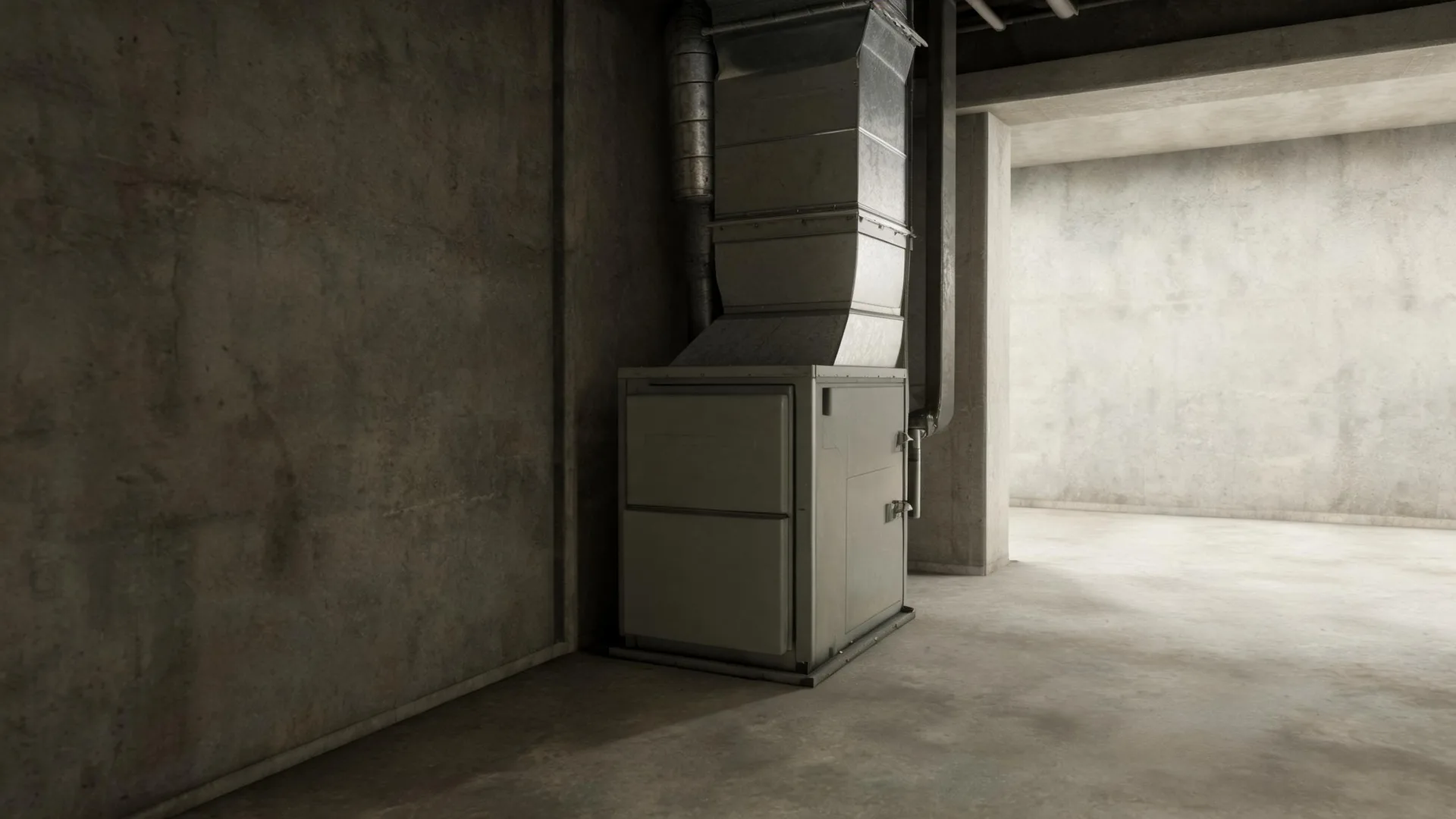
A furnace repair call here starts with the burner assembly and heat exchanger, because those parts absorb the bulk of each year's cycling load in a tight seasonal run. Homes in Winston County, MS run heat about five months a year, from November through March. Ignition components crack, heat exchangers fatigue, and burners accumulate carbon across that same window, then sit idle until the next season starts. A fault that develops late in March can go unnoticed until November, when the system fires up cold and the problem announces itself on the first hard freeze. Contractors working these repairs check ignition and combustion components before anything else.
Half the homes in Winston County, Mississippi were built in 1978 or earlier (2020-2024 ACS 5-year). A house built for the equipment that ran in it then has had its furnace swapped out at least once since, and whatever replaced the original unit has been running long enough to develop its own failure points. When a contractor opens the cabinet, the heat exchanger, the limit switches, and the burner assembly are where the real findings sit, and on equipment of this vintage, what they find often points to parts that distributors have discontinued or carry only on backorder. That is a different repair scope than a newer system, and it changes what a contractor quotes before the job is done.
The Parts of a Furnace a Contractor Checks First
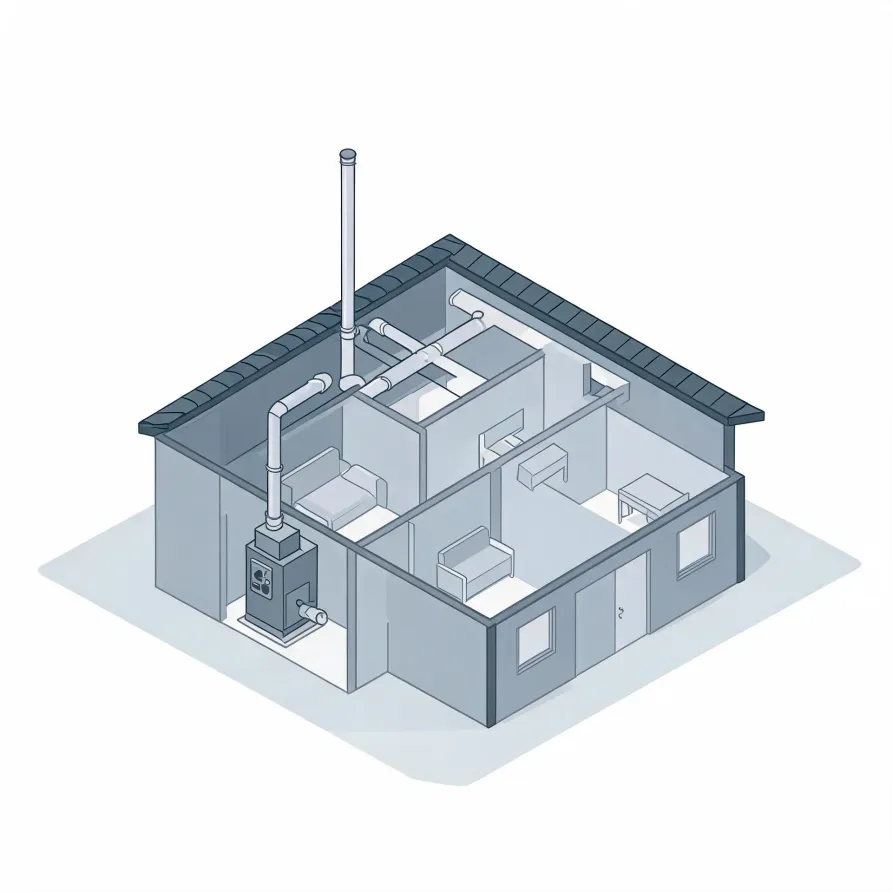
The heat exchanger sits at the core of the furnace cabinet, typically in a utility room, basement, or closet, and it is where combustion heat passes into the air your home breathes. A crack or breach there is a safety issue a contractor will look for before anything else. The burner assembly sits just below it and is the first thing a technician checks when the furnace fails to light or runs unevenly.
The blower motor and its fan wheel sit in the lower half of the cabinet and push conditioned air out through the supply ducts. The control board runs across the back of the cabinet and coordinates every step of each heating cycle. When a furnace behaves oddly, short-cycles, or throws an error code, that board is where a contractor reads what the system is reporting.
The drawing shows a general layout of these components, and a licensed contractor determines what applies to the specific furnace and installation in your home.
Find a contractor in Winston CountyWinston County, by the numbers
116 severe weather events were recorded in Winston County, Mississippi between 2015 and 2024.
NOAA National Centers for Environmental Information, Storm Events Database, bulk CSV export, events 2015-01-01 through 2024-12-31.Half the homes in Winston County, Mississippi were built in 1978 or earlier (2020-2024 ACS 5-year).
U.S. Census Bureau, 2020-2024 American Community Survey 5-Year EstimatesWinston County, Mississippi holds 8,231 housing units (2020-2024 ACS 5-year).
U.S. Census Bureau, 2020-2024 American Community Survey 5-Year EstimatesOwners occupy 73.0% of the occupied homes in Winston County, Mississippi (2020-2024 ACS 5-year).
U.S. Census Bureau, 2020-2024 American Community Survey 5-Year EstimatesCodes & Standards Governing Furnace Repair in Winston County, Mississippi5 sourced rules and standards
What happens when the contractor shows up
Non-weatherized gas furnaces manufactured on or after November 19, 2015 must reach 80.0 percent AFUE.
Non-weatherized oil-fired furnaces manufactured on or after November 19, 2015 must reach 83.0 percent AFUE.
Mobile home gas furnaces manufactured on or after November 19, 2015 must reach 80.0 percent AFUE.
Non-weatherized gas furnaces manufactured on or after December 18, 2028 must reach 95.0 percent AFUE, up from the 80.0 percent minimum that applies to units manufactured before that date.
What Winston County, Mississippi Requires for HVAC Repair Work
Mississippi licenses residential HVAC work at every tier and at any price: a subcontractor of any tier doing heating, ventilation or air conditioning work on a residential construction or improvement project must be licensed by the State Board of Contractors no matter the dollar amount.
Severe Weather Events in Winston County, Year by Year
Extreme weather puts real load on heating equipment: hard cold snaps, sudden pressure swings, and power disruptions all push furnaces to work harder and fail sooner. How often that happens in Winston County shapes how much repair work the equipment here actually needs.
116 severe weather events, 2015–2024. Source: NOAA National Centers for Environmental Information, Storm Events Database.