
Furnace smells like burning in Gulfport, MS

Step 1 of 3: Equipment

Why does my furnace smell like it's burning?

A burning smell from the furnace gets attention fast, especially the first time it kicks on after sitting idle most of the year. In Gulfport, winters are mild, so the furnace might only run on the coldest nights, and that gap between uses is usually behind the smell. Most homes here heat with electricity, which narrows down what's actually happening inside the unit when that odor shows up.

Usually it's dust burning off, but not always

Most electric furnaces sit unused for long stretches here since winters stay mild, and dust settles on the heating elements during that time. When you switch it on, that dust burns off and puts a smell into the air for a few minutes. That's normal and it clears on its own. What's not normal is a smell that lingers past the first run, or one that smells sharp and plasticky rather than dusty. That points to wiring or a part overheating inside the unit, and it means the furnace should be shut off and looked at before you run it again.

A gray high-efficiency furnace with white PVC vent pipes stands on a concrete pad in a basement, beside sheet-metal ductwork, copper piping and a poured concrete wall with wood framing at left.

Dust burning off

The first run of the season heats dust that settled on the heat exchanger over the warm months. You'll notice it for a few minutes after the furnace kicks on, then it clears. No odor the next time it runs, and nothing to shut down for.


A beige gas furnace in a basement with a metal flue pipe, galvanized sheet-metal ductwork to its left, and gas and water pipes along the concrete wall to its right.

Smell that stays

A smell that doesn't fade, or comes back every time the furnace runs, points to something else. Wiring insulation, a cracked heat exchanger, or dust packed inside the blower motor can all smell like burning. Shut the furnace off and have it looked at before running it again.

Why would my furnace burn smell be electrical, not dust

  • Winter nights average 42°F

    Winter nights here average 42°F. Cold enough to run the furnace hard some nights, so a wiring or motor smell shows up fast, not just at first startup.

  • Heat runs November through March

    Heat runs November through March in Harrison County. Five months of on-and-off cycling is enough for a loose wire or failing part to heat up and smell long after the first run.

  • 76.3% of homes heat with electricity

    76.3% of homes here heat with electricity. An electric furnace that smells burning after its first run is more likely a motor or heating element than a gas issue.

NOAA nClimDiv 1991-2020 · ACS 2020-2024

When it clears on its own

Dust burning off the heat exchanger fades within a few minutes and does not come back the next time the furnace runs. There's no odor on the second cycle, no breaker tripping, no burning plastic smell underneath it. If that's what you're smelling, there's nothing to shut down and nothing to schedule. It's the furnace doing what it does every year after sitting idle through a mild Gulfport winter so far. Let it run its course once, then check the next cycle to be sure the smell is really gone and not just fainter.

When it keeps coming back

A smell that returns every time the furnace kicks on, or one that smells like hot plastic or metal rather than dust, points to a wiring or motor problem instead. That kind of smell doesn't fade on its own, and running the furnace again won't clear it. Harrison County winters are mild, but the coldest nights still push the furnace hard enough to strain a failing part. Shut the furnace off at the thermostat or breaker if the smell is strong or doesn't let up, and have it looked at before the next cold night.

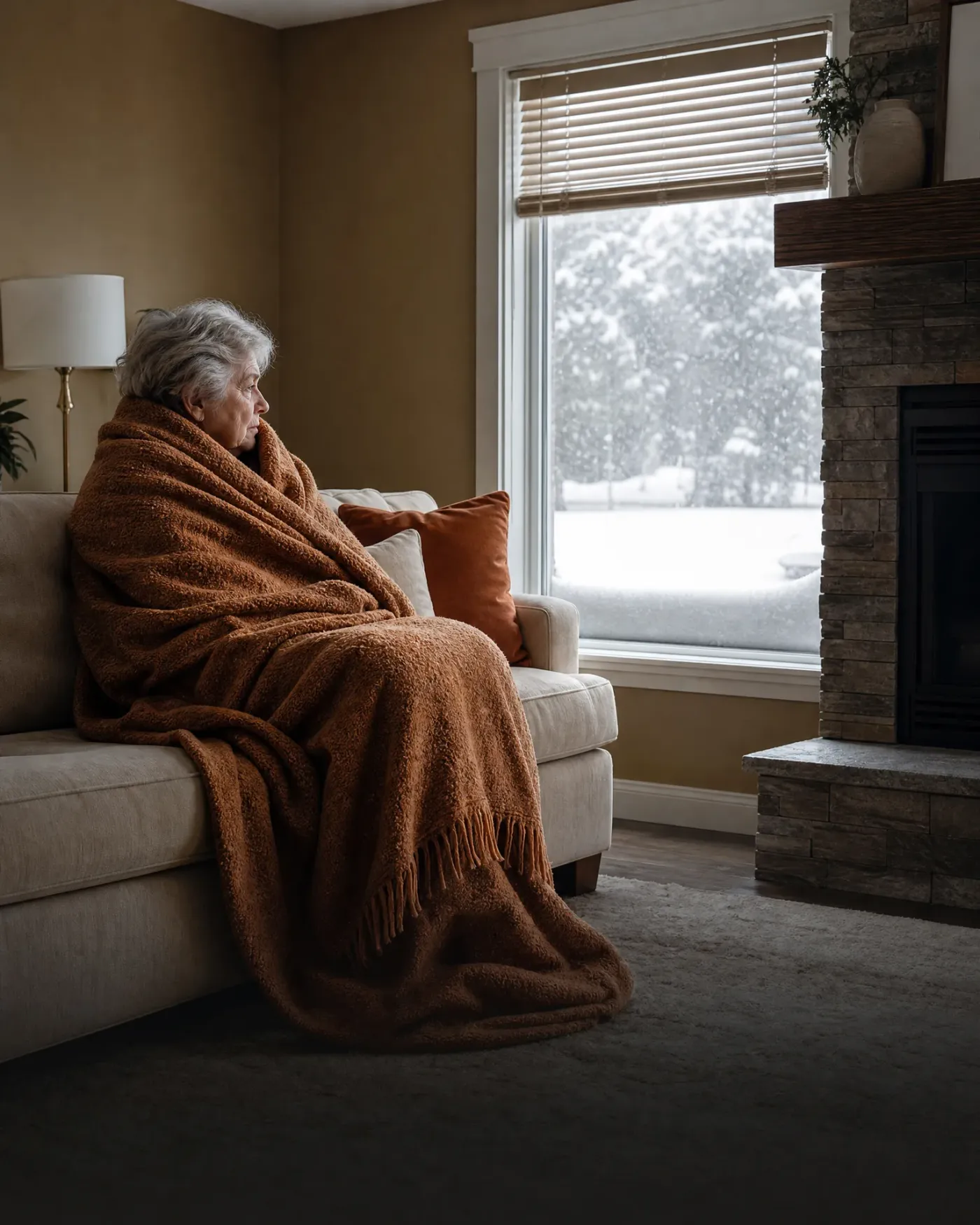
A woman in a cream cowl-neck sweater sits by a window with snow outside, in a dimly lit living room with a sofa, lit lamp, mirror, candles and a fireplace.
A woman in a gray turtleneck sweater sits beside a large window looking out at snow-covered evergreen trees, in a dimly lit living room with a lit fireplace, lamps, couch and houseplant.
A woman in a cream turtleneck sweater stands beside a large window with snow-covered ground and bare trees outside, in a dimly lit living room with lamps, a sofa and framed art.
A woman in a grey cowl-neck sweater stands indoors near a window, looking out at falling snow, with a lamp, framed picture and couch in the warmly lit room behind her.

What a burning smell puts at risk

A dust smell that clears in a few minutes is not putting your house at risk. A wiring smell is different. Wiring insulation that's overheating can keep getting hotter until it fails outright, and a furnace that trips its breaker repeatedly is telling you the wiring or the motor is already stressed. Left alone, that's a furnace that stops heating on the night you need it most, or in rarer cases, a fire risk inside the cabinet or the attic where the unit sits. The smell is early warning. It's worth acting on before the furnace makes the decision for you by shutting down or tripping out.

What it costs you to wait

Winter nights in Harrison County average in the low 40s, and heat runs November through March. That's not constant demand, but on the cold nights, the furnace works harder, and a wiring or motor problem that's borderline in October can fail outright in January. Waiting doesn't make the smell go away if it's electrical. It usually means calling for help after hours, in the cold, instead of on your schedule now. Checking it while it's still a small problem is exactly the kind of thing worth doing before you're standing in a cold house trying to find someone who can come out that night.

A bearded man in a plaid flannel shirt stands in a kitchen looking out a window toward snow-covered shrubs, with a steaming mug on the windowsill and potted plants on a shelf behind him.
A smiling man with dark curly hair in a navy t-shirt sits on a gray couch indoors, with a large-leafed plant and a window in the background.

Get matched with a furnace pro in Harrison County

A furnace that only runs a handful of nights a year in Gulfport is easy to put off checking, right up until the smell doesn't clear on the second cycle. If it's dust, you already know what that's like and it won't be back. If it's wiring, plastic or an electrical smell underneath the heat, that's not something to wait out through the rest of the cold nights this winter. Finding someone who works on furnaces means searching around, calling a few places, describing the smell again each time, and then weighing quotes that don't tell you much without seeing the unit. Sorting all of that takes time you may not want to spend while the smell is still happening. Handing it off instead gets your situation in front of a contractor who can look at your specific furnace and tell you what's actually burning, so the next cold night isn't the one you find out the hard way.

How the smell starts

  • Gas furnaces draw combustion air past the burners, so a scorched-dust smell starts at the heat exchanger, not the blower motor.
  • Electric furnaces have no burners, so a burning smell there usually traces to the heating elements or the wiring feeding them.
  • A smell that sharpens or turns metallic as the blower speeds up points to the motor bearings or the belt area, not dust.
  • Furnaces with a cracked heat exchanger can pull combustion odor into the airflow instead of venting it outside.
  • The limit switch is built to shut the furnace down before a wiring or motor smell turns into something worse.
  • A smell that follows the air through every room, not just near the furnace, usually means it started inside the ductwork itself.

Most homes in Gulfport heat with electricity, so there's no burner and no gas smell to rule out first. An electric furnace warms air by running it across heating elements, and a burning smell there almost always traces back to one of two things: the elements themselves or the wiring that feeds them. Neither clears on its own the way a dust smell does.

Listen to how the smell behaves once the blower is running. If it gets sharper or turns metallic as the blower speeds up, that's not dust settling off a part. That points to the motor bearings or the belt area, something moving and heating up under friction. A smell that stays faint and steady is a different problem than one that builds.

Pay attention to where the smell shows up, too. If it's strongest right at the furnace, the source is close by. If it follows the air into bedrooms and the living room the same way, it likely started inside the ductwork rather than at the unit itself.

Furnaces have a limit switch built in for exactly this reason. It's meant to shut the system down before a wiring or motor problem gets worse. If your furnace has already tripped once and the smell was there before it did, that's the switch doing its job, not a sign the problem solved itself.

A beige metal furnace with a louvered front panel stands on a concrete floor against a concrete wall, connected to galvanized sheet-metal ductwork and a metal pipe.
Before you get your furnace repair
A gray high-efficiency furnace stands on a concrete basement floor beside sheet-metal ductwork, with white PVC vent pipes and a black flexible line running up to exposed wood floor joists, next to a wood-framed post against a concrete wall.
After you get your furnace repair
A gray high-efficiency furnace in a basement with PVC vent pipes, sheet-metal ductwork, copper and insulated pipes, a water heater at left, and an unfinished wood-stud wall at right.

A furnace running clean

This is what a furnace looks like when nothing's wrong. The flue pipes are tight and white, the ductwork is sealed, and there's no sign of scorching anywhere near the burners. A furnace in this shape can still throw a dust smell on its first cold night, but it clears and stays cleared.

An older beige furnace with louvered front panels stands on a concrete basement floor beside galvanized ductwork, metal and plastic pipes, exposed wood framing, and a cylindrical water heater at right.

A furnace worth a second look

Galvanized ductwork, older flue pipes, exposed gas lines running past wood framing. None of that means trouble by itself, but it's the setup where a burning smell is worth checking rather than waiting out. A furnace this age may not give much warning before a part fails.

Winter nights average 42°F

At 42°F most winter nights, your furnace isn't working hard to keep up. It cycles on for shorter stretches instead of running long and hot, so a burning smell that shows up and lingers past the first few minutes is worth a look, not something the mild temperature outside would explain away.

NOAA nClimDiv 1991-2020

A gray high-efficiency furnace with white PVC venting pipes stands on blocks in a basement next to sheet-metal ductwork, with exposed wood framing on the left and a concrete wall and floor.
A furnace like this one, with tight PVC venting and clean sheet-metal ductwork, has nothing near the burners to scorch.
An older gas furnace with two white PVC vent pipes stands on a concrete basement floor beside galvanized sheet-metal ductwork, flexible conduit, and piping along a wall.
Loose flue pipe, an older cabinet, and ductwork pieced together near exposed framing give heat and odor more places to escape.
  1. Furnace sits unused for months, dust settles on the heat exchanger.

  2. Burners fire and the heat exchanger warms up fast.

  3. Dust on the exchanger scorches and gives off a burning smell.

  4. Blower pushes the smell through the ducts into the house.

A man in a dark blue shirt stands in an open front doorway of a stucco and wood-clad house, facing a blond woman seen from behind in the foreground on a stone walkway.

So that's what you're smelling

Dust burning off the heat exchanger clears in a few minutes and doesn't come back. A wiring or electrical smell doesn't clear, and it tends to show up again the next time the furnace runs, sometimes worse. That difference is what tells you whether to let the furnace finish its cycle or shut it off at the breaker.

If it's the second one, you don't have to spend the next hour calling furnace repair companies around Harrison County, describing the smell over and over, and weighing quotes against each other. You can get matched with a contractor who takes furnace calls like this one, and they'll reach out to you directly to sort out what's going on with yours.

A living room corner with a beige sofa and cushion, a round wooden coffee table holding a pale ceramic vase of eucalyptus stems and a wooden bowl, and a curtained window with a potted plant above a latticed radiator cover in the background.
A house roofline with a stone chimney rises above trees, with a tall pine, Spanish-moss-draped oak branches, and misty hills in the background.

Get your furnace to the right pro

Get a local pro

You only hire the pro if you want to.

A furnace that only runs on the coldest nights still needs the burners and wiring checked when something smells wrong. Sorting that out yourself means calling around Gulfport, explaining the smell more than once, and waiting on quotes. Send the request and skip that part, so you can find out what's burning sooner.