Tell us about the job
Takes about a minute. No obligation.
A contractor quoting a furnace installation in Tallahatchie County has to price for real winter demand, not a few cold snaps. Homes in Tallahatchie County, MS run heat about five months a year, from November through March. The burner and heat exchanger carry that load through repeated daily cycles, and a unit undersized for those conditions accumulates wear on those parts faster than the homeowner sees coming. A sloppy duct seal or a mismatched heat exchanger, invisible at startup, becomes a measurable problem by the time the season ends. Proper sizing and commissioning are what keep that from happening.
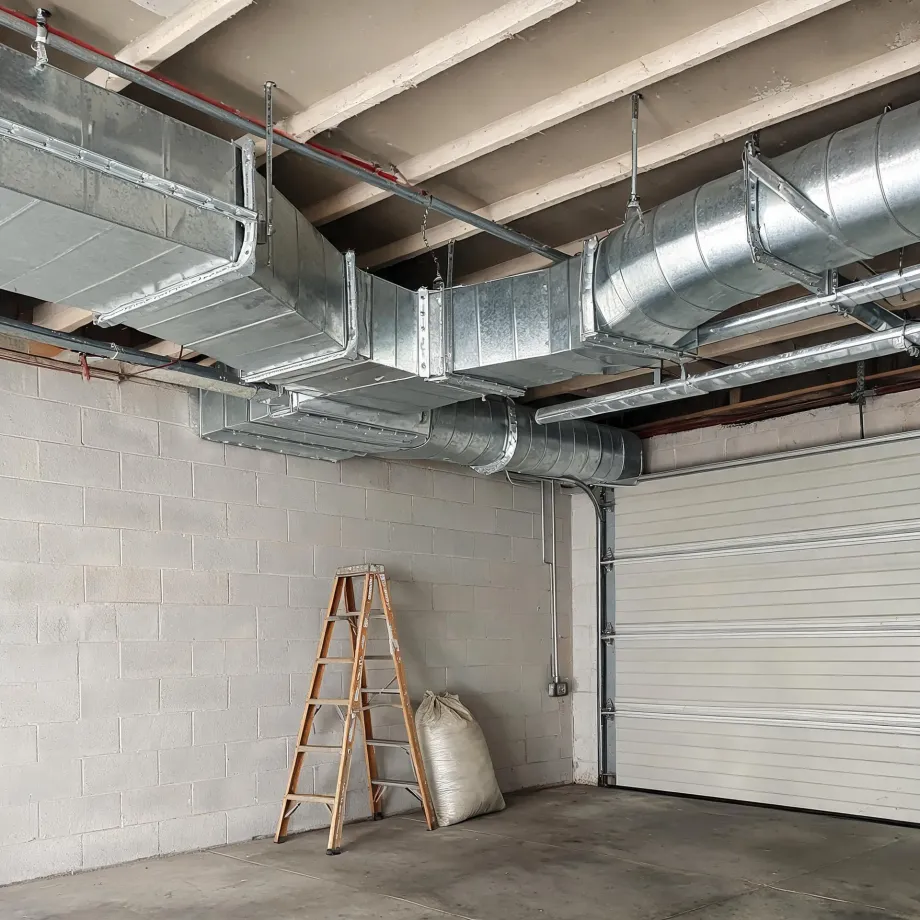
Ductwork sized and routed for a different system is what a contractor opens the walls to find in a substantial portion of Tallahatchie County houses. Half the homes in Tallahatchie County, Mississippi were built in 1978 or earlier (2020-2024 ACS 5-year). That means the furnace itself is often the straightforward part of a job, while the existing duct runs decide how much else changes. A contractor quoting an installation here measures and tests what is already in place before settling on a unit, because ductwork that cannot carry the airflow a new furnace requires produces an undersized result regardless of the equipment selected.
What Gets Installed With a New Furnace
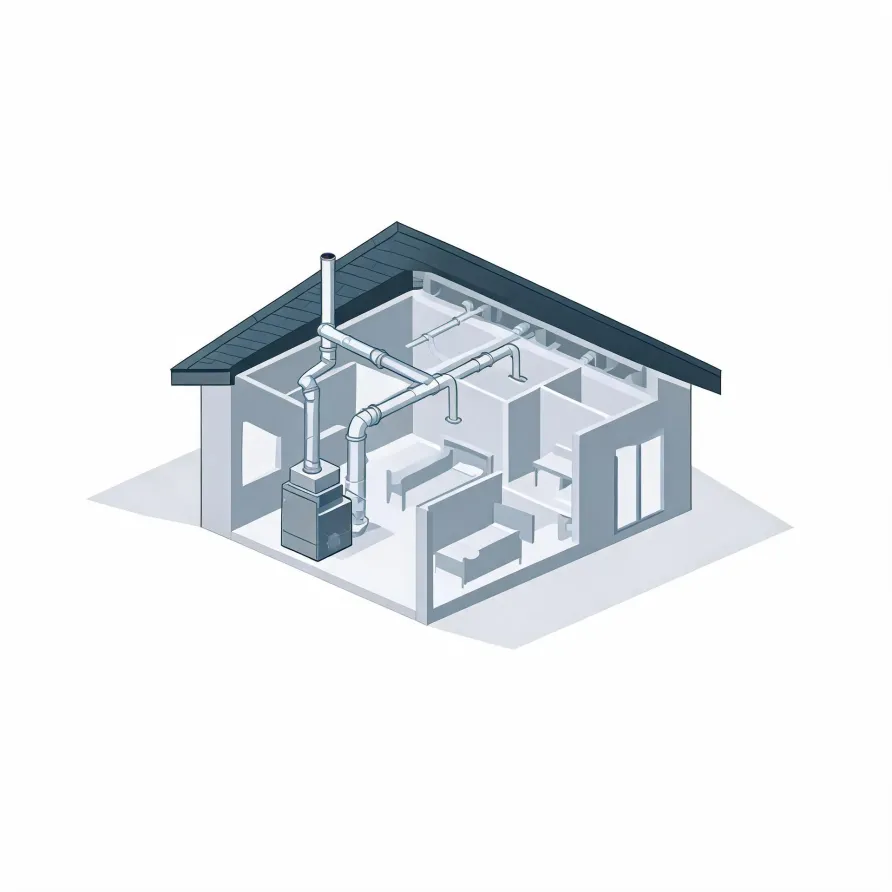
The furnace itself sits in a utility space, basement, or closet, and it is the unit a homeowner would walk up to and recognize. A heat exchanger lives inside it, pulling heat from the combustion process and transferring it to the air moving through the cabinet. An attached blower motor then pushes that conditioned air out into the home.
A flue pipe runs from the furnace to an exterior wall or roof, carrying combustion gases out of the house. The thermostat goes on a main living-area wall and gives the homeowner a single point of control over the whole system. A filter housing, positioned where return air enters the cabinet, holds the filter that keeps debris from passing through the unit.
The drawing shows a representative layout, and a licensed contractor determines exactly what applies to this house based on its construction, existing connections, and equipment location.
Find a contractor in Tallahatchie CountyTallahatchie County by the Numbers
30 severe weather events were recorded in Tallahatchie County, Mississippi between 2015 and 2024.
NOAA National Centers for Environmental Information, Storm Events Database, bulk CSV export, events 2015-01-01 through 2024-12-31.Half the homes in Tallahatchie County, Mississippi were built in 1978 or earlier (2020-2024 ACS 5-year).
U.S. Census Bureau, 2020-2024 American Community Survey 5-Year EstimatesTallahatchie County, Mississippi holds 5,505 housing units (2020-2024 ACS 5-year).
U.S. Census Bureau, 2020-2024 American Community Survey 5-Year EstimatesOwners occupy 64.5% of the occupied homes in Tallahatchie County, Mississippi (2020-2024 ACS 5-year).
U.S. Census Bureau, 2020-2024 American Community Survey 5-Year EstimatesFurnace Installation Rules & Codes for Tallahatchie County, Mississippi5 sourced standards and regulations
What the contractor does on installation day
Non-weatherized gas furnaces manufactured on or after November 19, 2015 must reach 80.0 percent AFUE.
Non-weatherized oil-fired furnaces manufactured on or after November 19, 2015 must reach 83.0 percent AFUE.
Mobile home gas furnaces manufactured on or after November 19, 2015 must reach 80.0 percent AFUE.
Non-weatherized gas furnaces manufactured on or after December 18, 2028 must reach 95.0 percent AFUE, up from the 80.0 percent minimum that applies to units manufactured before that date.
Licensing Rules for HVAC Work in Tallahatchie County, Mississippi
Mississippi licenses residential HVAC work at every tier and at any price: a subcontractor of any tier doing heating, ventilation or air conditioning work on a residential construction or improvement project must be licensed by the State Board of Contractors no matter the dollar amount.
Severe Weather History in Tallahatchie County
Weather puts a load on heating equipment that mild-climate specs never account for. A furnace sized and installed for what actually hits Tallahatchie County will hold up differently than one built to a generic standard.
30 severe weather events, 2015–2024. Source: NOAA National Centers for Environmental Information, Storm Events Database.