Tell us about the job
Takes about a minute. No obligation.
Sizing a furnace for a Coahoma County home is not a generic calculation: the burner, heat exchanger, and ignition system here carry a real seasonal load. Homes in Coahoma County, MS run heat about five months a year, from November through March. A contractor doing a proper load calculation for this county accounts for that runtime when selecting equipment, because an undersized unit runs longer cycles trying to meet setpoint, and the heat exchanger pays for it over years. Flue venting, combustion air supply, and duct capacity all follow from the same starting point: what this house actually demands through a winter.
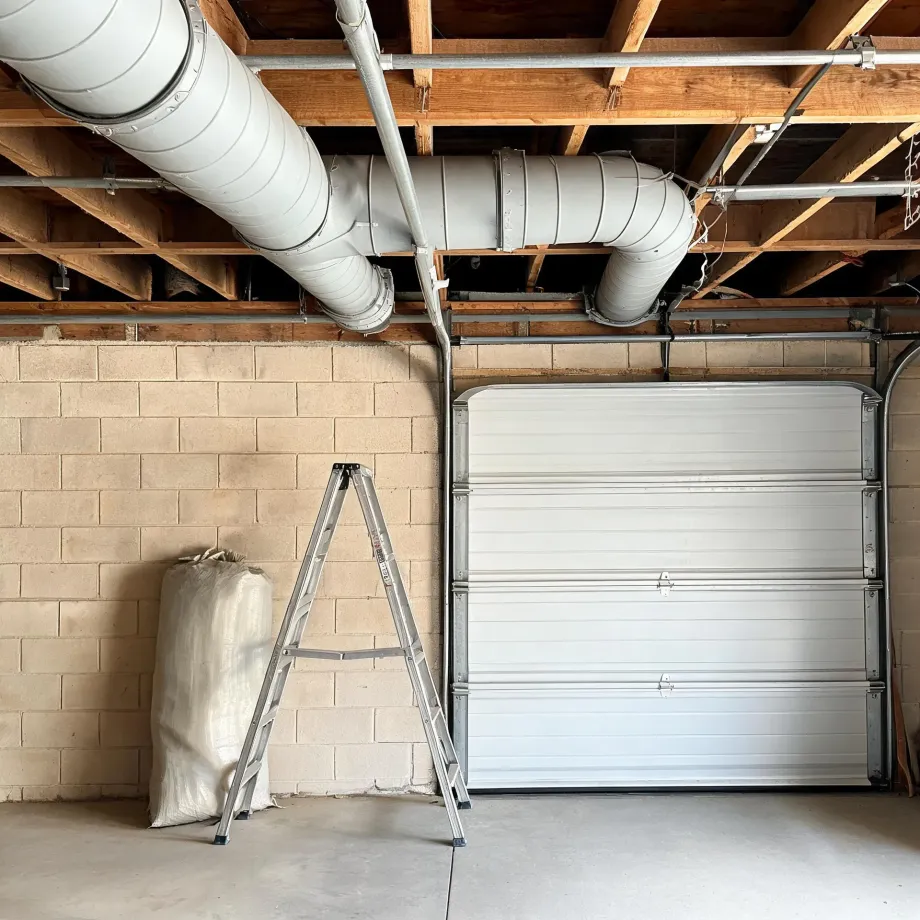
Ductwork sized and routed for an earlier generation of equipment is what a contractor runs into here, and whether it can carry what a new furnace puts out is the question that shapes the whole job. Half the homes in Coahoma County, Mississippi were built in 1970 or earlier (2020-2024 ACS 5-year). That history shows up in supply trunk dimensions, in how runs were laid out, and in what the existing electrical service was drawn for. A unit that performs well in one house can underdeliver in another if the duct system feeding it was never built to those specs, and a quote that prices only the furnace is missing the variable that actually decides the result.
What Gets Installed With a New Furnace
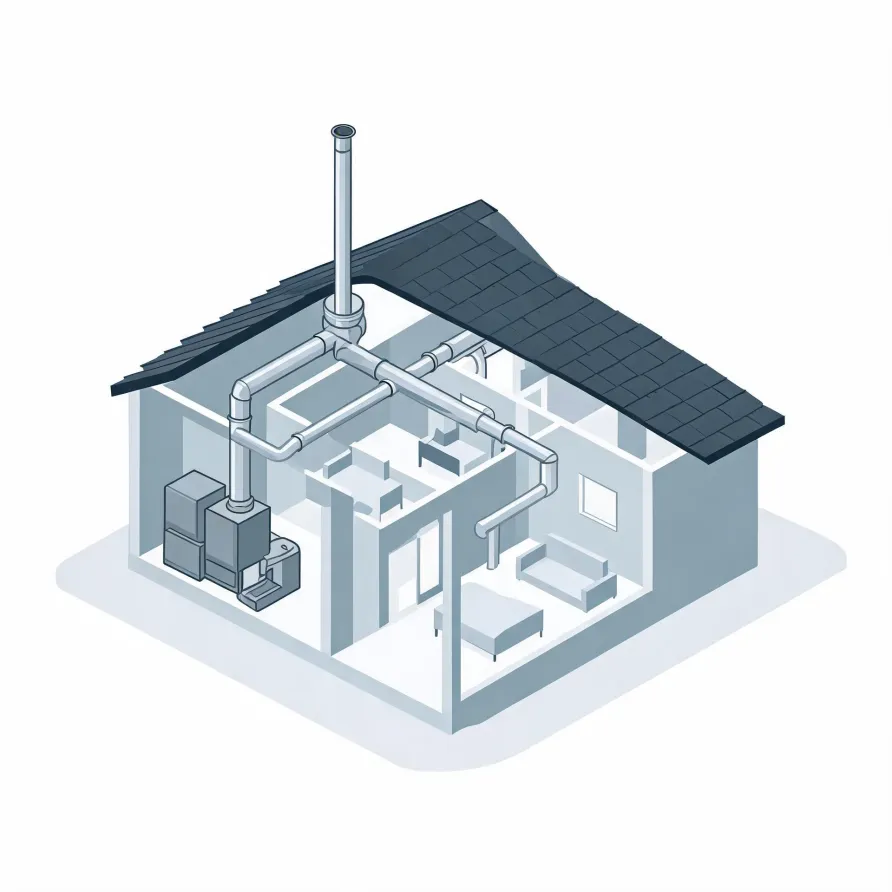
The furnace itself sits in a utility room, basement, or closet near the center of the house. It is the box that generates heat by burning fuel or running electrical resistance coils. A flue pipe exits through the wall or roof to carry combustion gases out of the living space.
The air handler and blower fan move conditioned air from the furnace into the supply ducts that feed each room. The thermostat mounts on an interior wall and serves as the control point for the whole system, signaling the furnace when to fire and when to stop.
The drawing shows a typical layout, and a licensed contractor determines what the installation requires in your specific home.
Find a contractor in Coahoma CountyCoahoma County, by the numbers
33 severe weather events were recorded in Coahoma County, Mississippi between 2015 and 2024.
NOAA National Centers for Environmental Information, Storm Events Database, bulk CSV export, events 2015-01-01 through 2024-12-31.Half the homes in Coahoma County, Mississippi were built in 1970 or earlier (2020-2024 ACS 5-year).
U.S. Census Bureau, 2020-2024 American Community Survey 5-Year EstimatesCoahoma County, Mississippi holds 10,189 housing units (2020-2024 ACS 5-year).
U.S. Census Bureau, 2020-2024 American Community Survey 5-Year EstimatesOwners occupy 52.1% of the occupied homes in Coahoma County, Mississippi (2020-2024 ACS 5-year).
U.S. Census Bureau, 2020-2024 American Community Survey 5-Year EstimatesCodes & Standards Governing Furnace Installation in Coahoma County, Mississippi5 sourced rules and standards
What the Installation Actually Looks Like
Non-weatherized gas furnaces manufactured on or after November 19, 2015 must reach 80.0 percent AFUE.
Non-weatherized oil-fired furnaces manufactured on or after November 19, 2015 must reach 83.0 percent AFUE.
Mobile home gas furnaces manufactured on or after November 19, 2015 must reach 80.0 percent AFUE.
Non-weatherized gas furnaces manufactured on or after December 18, 2028 must reach 95.0 percent AFUE, up from the 80.0 percent minimum that applies to units manufactured before that date.
Licensing Rules for HVAC Work in Coahoma County, Mississippi
Mississippi licenses residential HVAC work at every tier and at any price: a subcontractor of any tier doing heating, ventilation or air conditioning work on a residential construction or improvement project must be licensed by the State Board of Contractors no matter the dollar amount.
Severe Weather Events in Coahoma County
Weather puts real load on heating equipment, and that load varies by where you live. A furnace sized and installed for local conditions holds up better than one spec'd against a generic standard.
33 severe weather events, 2015–2024. Source: NOAA National Centers for Environmental Information, Storm Events Database.